The Ultimate B2B Guide to Land Rover Crankshaft Main Bearings: Engineering, Hydrodynamic Lubrication, Diagnosis, and Wholesale Sourcing
The lede: The Crankshaft Main Bearing serves as a vital hydraulic boundary inside an engine. It separates rotating steel journals from stationary engine block saddles. These precision bearing shells support the entire rotating crankshaft under extreme combustion pressures. They absorb peak engine torque and continuous centrifugal forces. In luxury Land Rover SUVs and rugged utility vehicles, correct oil clearance is essential. A minute variance in oil film thickness determines whether an engine runs smoothly or suffers catastrophic seizure.
This B2B technical guide explains fluid film mechanics, multi-layer metallurgy, and common failure modes. It outlines diagnostic steps for workshops and sizing logic for engine rebuilders. We also cover Land Rover engine platforms, including TDV6, SDV6, Ingenium, and V8 engines. Information regarding PERFECTRAIL comes strictly from public company sources. PERFECTRAIL specializes in genuine and aftermarket Land Rover parts with 15+ years of export experience. The supplier provides low MOQ support, rapid dispatch, a 12-month warranty, and rigorous product inspection. Sourcing main bearings requires verified engine codes, journal diameters, oil hole alignment, and tang configurations.
1. Global B2B Market Opportunity for Land Rover Crankshaft Main Bearings
The global engine remanufacturing sector continues to expand rapidly. Modern internal combustion engines operate under higher cylinder pressures than ever before. Turbocharged luxury powertrains face heavy thermal loads and extended service intervals. In the premium SUV market, Land Rover vehicles represent a large overhaul segment. Models range from legacy Defender Tdi diesels to modern Range Rover Sport TDV6 and Discovery SDV6 models. In addition, high-efficiency Ingenium four-cylinder engines require regular precision rebuilds. Bottom-end overhauls deliver high-margin revenue for specialist repair workshops.
When an engine loses oil pressure or develops rod knock, the main bearings require immediate attention. Unlike bolt-on accessories, main bearings cannot be changed through trial and error. A failed main bearing demands a full engine removal and complete block teardown. Machine shops must re-grind the crankshaft, align-hone the block tunnel, and fit new bearings. Importers, machine shops, and parts distributors need reliable manufacturing partners. Consistent bearing quality protects workshop reputations and eliminates expensive warranty disputes.
Market Drivers Across Major Global Regions
Luxury Land Rover SUVs maintain strong residual values worldwide. In Europe, North America, the Middle East, Latin America, Australia, and Africa, owners prefer engine overhauls over vehicle scrappage. However, engine builders often encounter inconsistent aftermarket bearings. Some shells suffer from wall thickness taper or improper crush height. Others lack anti-rotation locating tangs or feature weak multi-layer alloys. Distributors who provide Standard (STD) and precision undersize bearings (0.25mm and 0.50mm) secure a substantial commercial edge.
The High-Stakes Nature of Engine Bearing Procurement
Main bearings are high-leverage engine components. Their unit cost is modest compared to the extensive labor required for installation. If an inferior bearing shell fails, the crankshaft journals and crankcase saddles are ruined instantly. Professional machine shops demand exact metallurgical consistency. They require micro-inch surface smoothness, precise oil grooving, and guaranteed crush height.
Commercial buyers use specific search queries on Google and B2B portals. They search for terms like “Land Rover TDV6 main bearing set STD” or “Range Rover crankshaft bearing catalog.” Other popular searches include “undersize 0.25mm main bearings Land Rover” and “OEM Land Rover engine bearing supplier.” Publishing comprehensive technical content establishes authority. It attracts procurement managers and solves practical engine rebuilding challenges.
PERFECTRAIL’s Strategic B2B Supply Capability
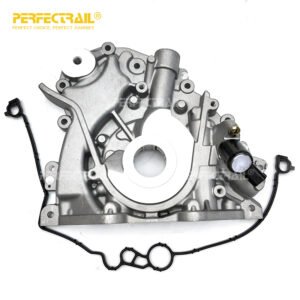
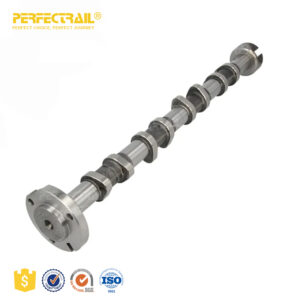
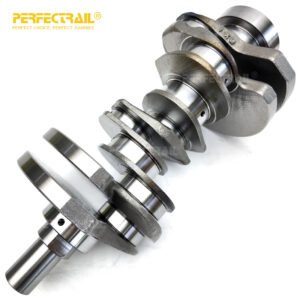
PERFECTRAIL is a premier China-based Land Rover genuine and aftermarket parts distributor. The company brings over 15 years of international export experience to the market. Its verified catalog contains more than 250,000 Land Rover parts. These products cover engine components, chassis systems, and body parts across 50+ countries. Key engine offerings include crankshafts, camshafts, oil pumps, cylinder heads, water pumps, and crankshaft main bearings.
PERFECTRAIL provides flexible low-MOQ policies to support growing distributors. Fast-moving items ship in 3 to 7 days from ready warehouse stock. Custom orders benefit from private-label packaging and free laser marking. Every shipment is covered by a 12-month or 50,000 km warranty. Strict supplier evaluation ensures dependable product performance.
B2B Commercial Takeaway: Never treat crankshaft main bearings as generic stamped metal parts. Wholesalers who provide verified application databases and precision sizing gain loyal clients. Bundling main bearings with rod bearings, thrust washers, and oil pumps builds long-term profitability.
2. How a Crankshaft Main Bearing Works: Hydrodynamic Lubrication & Fluid Film Dynamics
Main bearings operate on the principles of hydrodynamic fluid lubrication. In a running engine, the crankshaft does not contact the bearing shell directly. Instead, the steel journal floats on a pressurized cushion of motor oil. This dynamic oil film measures between 0.0008 inches and 0.0025 inches (0.020 mm to 0.065 mm). This thin layer prevents catastrophic metal-to-metal friction under high load.
When the engine is stopped, the crankshaft journal rests directly on the lower bearing shell. As the crankshaft turns, oil is drawn into the narrowing gap between the journal and bearing shell. Viscous drag pumps the lubricant forward, generating high hydraulic pressure. Localized oil pressure can exceed 5,000 psi (350 bar) during heavy combustion strokes. This hydraulic wedge lifts the journal, maintaining full fluid separation.
The Stribeck Curve and Lubrication Regimes
Engine bearings operate across three distinct lubrication states described by the Stribeck Curve:
- Boundary Lubrication: Occurs during cold engine starts, hot restarts, and severe low-RPM engine lugging. The oil film is thinner than the surface microscopic roughness. Direct peak contact occurs. A soft bearing overlay is critical to prevent metal galling.
- Mixed Lubrication: Occurs during rapid acceleration and abrupt engine load transitions. The oil film partially separates the metal surfaces. Anti-wear additives and low-friction coatings protect the components from excessive friction.
- Hydrodynamic (Full-Film) Lubrication: The normal operating state at cruising engine speeds. The oil film completely separates the steel journal from the bearing shell. Friction is limited to fluid shear within the oil, resulting in virtually zero mechanical wear.
Anatomy of a Main Bearing Shell
A split-sleeve main bearing set contains precision upper and lower shells:
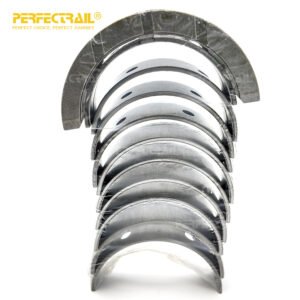
- Upper Main Bearing Shell: Mounts inside the engine block saddle. It features precision oil holes aligned with block oil galleries. A continuous circumferential oil groove supplies oil to internal crankshaft drillings that feed connecting rod journals.
- Lower Main Bearing Shell: Clamped inside the main bearing cap or lower bedplate. Modern turbo-diesel engines use plain, ungrooved lower shells. This solid surface maximizes the load-bearing area against downward combustion forces.
- Locating Tangs (Notches): Small stamped tabs on the shell parting line that assist initial assembly alignment. Tangs guide positioning, while radial crush pressure provides total rotational retention.
- Bearing Eccentricity: Engineered shell wall thickness that is thicker at the crown and tapers toward the parting line. This geometry accommodates block bore flex under bolt torque, creating an ideal hydrodynamic wedge.
- Parting Line Relief: A micro-machined chamfer along the split line. It prevents the bearing edges from pinching the crankshaft journal under thermal expansion.
The Crucial Concept of Bearing Crush
Bearing crush is the most critical mechanical parameter during installation. Each bearing half is manufactured slightly taller than the housing bore radius. When the main caps are torqued, the protruding shell ends press tightly against each other. This action forces the outer steel backing firmly into the block saddle bore.
Proper crush achieves two essential goals. First, massive radial friction locks the bearing shell in place, preventing rotational spinning. Second, it ensures direct metal-to-metal thermal contact. Heat from the oil film transfers efficiently into the engine block and cooling jackets. Insufficient crush causes loose shells, fretting corrosion, and catastrophic spun bearings.
Understanding Dynamic Oil Film Pressure Gradients
Oil pressure inside the bearing clearance varies continuously. The highest pressure forms directly under the loaded journal area. Peak hydraulic pressure easily reaches 350 bar during combustion strokes. This pressure forces oil outward toward the shell parting lines.
The continuous oil feed from the block gallery replenishes this fluid loss. A stable supply prevents localized oil film collapse. If gallery pressure drops, the fluid wedge thins out immediately. The rotating journal then touches the soft overlay directly, causing rapid wear.
Journal Surface Finish (Ra & Rz) and Asperity Mechanics
Crankshaft journal smoothness directly impacts bearing durability. Machine shops must polish reground journals to a mirror finish. An Ra surface roughness below 0.15 microns is recommended. Microscopic metal peaks (asperities) can puncture the thin hydrodynamic oil film.
Proper belt polishing removes grinding burrs and directional chatter marks. Smooth journals reduce initial break-in friction significantly. They also lower operating temperatures across the bearing crown. This careful preparation guarantees long engine life under heavy load.
Engineering Note for Workshops: Locating tangs do not stop a bearing from spinning under severe oil starvation. Rotational retention relies entirely on proper crush height, clean dry saddle bores, and accurate bolt torque.
3. Main Bearing Metallurgy, Shell Construction, and Sizing Standards
Automotive plain bearings must balance competing material properties. They must be rigid enough to support heavy combustion loads without deforming. At the same time, they must remain soft enough to conform to microscopic surface variations. They must also absorb abrasive debris without scoring hardened steel journals. Modern engine bearings use multi-layer composite metallurgy to achieve these goals.
Bi-Metal vs. Tri-Metal Bearing Architecture
Two main bearing constructions are common in Land Rover engines. Each structure offers distinct operational characteristics for petrol and diesel applications.
1. Bi-Metal Aluminium-Silicon Alloys
Bi-metal bearings bond a low-carbon steel backing to an aluminium-silicon alloy lining. The lining thickness ranges from 0.25 mm to 0.40 mm. Dispersed silicon particles micro-polish the journal during normal engine operation. Tin additions provide solid-film lubricity. Bi-metal bearings are 100% lead-free and highly resistant to seizure. They deliver reliable service in moderate-load petrol engines and light-duty platforms.
2. Tri-Metal Copper-Lead / Bronze Constructions
Tri-metal construction is the industry benchmark for heavy-duty turbo-diesel engines. It powers high-torque platforms like the Land Rover TDV6, SDV6, and SDV8. The structure uses three dedicated material layers:
- Steel Backing: High-tensile steel provides structural stiffness, crush retention, and thermal conduction.
- Intermediate Bronze Layer: Sintered or cast copper-lead matrix delivers high fatigue strength up to 12,000 psi.
- Electroplated Babbitt Overlay: A 15 to 25 micron lead-tin-copper layer allows quick break-in and particle embedment.
3. Polymer and Sputter Coated Bearings
Modern Land Rover turbo-diesels use high-tech polymer or sputter-coated shells. Physical Vapor Deposition (PVD) sputtering applies a dense aluminium-tin overlay for heavy loads. Advanced resin matrices contain MoS2 and PTFE solid lubricants. These coatings prevent scuffing during automatic stop-start cycles and hybrid drive transitions.
4. Overlay Wear Indicators & Visual Exposure
Tri-metal bearings provide built-in visual wear warnings. The top babbitt overlay displays a silver-grey appearance. As normal engine hours accumulate, this overlay slowly wears down. When the intermediate bronze layer appears, a distinct copper color becomes visible.
Engine builders use this visual cue during routine overhauls. Light copper exposure indicates normal high-mileage wear. However, widespread bronze exposure across the crown signals chronic oil breakdown. Immediate shell replacement is required to protect the crankshaft journal.
5. Polymer Resins: Molybdenum Disulfide vs. PTFE
Polymer coatings combine synthetic polyamide resin with solid lubricant particles. Molybdenum disulfide (MoS2) delivers high load-carrying capacity under heavy diesel boost. Polytetrafluoroethylene (PTFE) reduces boundary friction during cold engine cranking.
These polymer layers measure between 5 and 10 microns in thickness. They absorb minor surface debris easily. They also resist chemical corrosion from acidic combustion by-products. This makes polymer-coated shells ideal for commercial vehicle fleets operating on varied fuel qualities.
Key Metallurgical Performance Metrics
Engine builders evaluate four core mechanical characteristics when selecting main bearing materials:
- Fatigue Strength: The highest cyclic load a bearing handles before developing surface micro-cracks.
- Conformability: The ability of the soft lining to adjust to minor crankshaft deflection or bore taper.
- Embeddability: The capacity to trap tiny abrasive particles below the surface to prevent journal scoring.
- Corrosion Resistance: The resistance to chemical degradation from acidic combustion by-products and degraded engine oil.
Precision Sizing Standards: STD vs. Undersize Grinds
During engine machining, crankshaft journals are precision-ground. Rebuilders choose matching bearing thickness tiers to maintain correct oil clearance:
| Bearing Size Designation | Imperial Sizing | Crankshaft Journal Status | Application & Machine Shop Action |
|---|---|---|---|
| STD (Standard) | 0.000″ | Factory Original Dimension | Standard rebuild; journals micro-polished with zero diameter reduction. |
| +0.25 mm (0.25 US) | 0.010″ Undersize | Ground 0.25mm under standard | First repair grind; bearing wall thickness increased by 0.125mm per shell. |
| +0.50 mm (0.50 US) | 0.020″ Undersize | Ground 0.50mm under standard | Second repair grind for deeply scored journals; bearing wall increased by 0.250mm. |
| +0.75 mm / +1.00 mm | 0.030″ / 0.040″ | Heavy repair grind | Specialist commercial restoration where crankshaft replacement is unavailable. |
4. Land Rover Engine Families and Main Bearing Fitment Logic
Land Rover powertrains have evolved through distinct mechanical generations. Each engine family features unique journal diameters, oil passage drillings, and thrust control systems. B2B buyers must navigate these platform differences carefully to avoid costly fitment errors.
1. The 2.7L / 3.0L TDV6 & SDV6 Diesel Platform
The 2.7L and 3.0L twin-turbo diesel family powers Discovery 3, Discovery 4, Discovery 5, and Range Rover Sport models. It is one of the highest-volume engine overhaul markets in the world. The bottom-end uses a structural lower bedplate supporting four main journals.
Early factory TDV6 engines used tangless bearing shells without anti-rotation notches. Under low oil pressure, shells could rotate inside the bore. This spun bearing blocked the oil feed hole, causing sudden crankshaft failure. High-quality aftermarket main bearings include precision locating tangs and optimized oil holes. These design improvements permanently eliminate factory assembly vulnerabilities.
PERFECTRAIL provides dedicated inventory for the Crankshaft Main Bearing for Land Rover TDV6 STD and repair undersizes. Ready stock ensures immediate dispatch for international workshops.
TDV6 / SDV6 Bedplate Alignment and Torque Procedures
The TDV6 crankcase bedplate replaces individual main bearing caps. This cast aluminium structure stiffens the lower cylinder block significantly. When assembling the bedplate, technicians must clean all sealant mating surfaces thoroughly.
Main bearing bolts follow a strict center-outward torque sequence. Rebuilders must use new torque-to-yield stretch bolts during overhaul. Uneven bolt torque distorts the main bearing saddle bores, causing premature journal pinching and rapid bearing failure.
2. The 2.0L Ingenium Diesel & Petrol Family
The modular Ingenium platform powers modern Defender L663, Discovery Sport, Range Rover Evoque, and Velar models. These all-aluminium engines feature five main bearing journals with balance shaft integration. They operate with tight oil clearances below 0.035 mm using low-viscosity 0W-20 lubricants. Ingenium bearings require micro-inch dimensional accuracy and advanced polymer coatings to withstand repeated automatic stop-start cycles.
Ingenium Variable-Displacement Oil Pump Interaction
Ingenium engines feature electronically controlled variable-displacement vane oil pumps. The ECU adjusts oil pressure dynamically based on engine RPM and load. Low oil pressure at idle reduces parasitic drag and improves fuel economy.
However, low idle pressure places immense reliance on bearing surface coatings. High-grade polymer overlays prevent metal-to-metal scuffing during stop-start transitions. Rebuilders must always verify oil solenoid operation during every Ingenium engine overhaul.
3. Legacy Defender & Discovery Platforms
Classic Land Rover Defender L316 and Discovery 2 models rely on heavy-duty diesel engines. The 2.2L and 2.4L Puma Duratorq engines use specialized bearing sets such as LR019685 Crankshaft Main Bearing for Land Rover Defender. These engines require rugged bronze tri-metal shells capable of handling harsh off-road dust loading and demanding expedition service.
4. The 3.6L & 4.4L SDV8 / TDV8 Twin-Turbo Diesels
Full-size Range Rover Vogue and Range Rover Sport models utilize massive V8 diesel engines. These powertrains deliver up to 740 Nm of torque across five main journals. Sputter-coated tri-metal main bearing sets with integrated 360-degree thrust washers are essential. They resist extreme combustion forces and heavy torque converter axial thrust.
Comprehensive Sourcing Matrix
| Land Rover Model | Engine Code / Type | Main Journal Count | Recommended Metallurgy & Size |
|---|---|---|---|
| Discovery 3 / 4, RR Sport | 2.7L / 3.0L TDV6 / SDV6 | 4 Main Journals | Heavy-Duty Tri-Metal (STD, +0.25mm, +0.50mm) |
| Defender L316 2.2L / 2.4L | Puma Duratorq Diesel | 5 Main Journals | Tri-Metal / Sintered Bronze (LR019685 / STD) |
| Defender L663, Evoque, Velar | 2.0L Ingenium AJ200D/P | 5 Main Journals | Lead-Free Polymer / Bi-Metal Composite (STD) |
| Range Rover Vogue / Sport | 4.4L SDV8 / TDV8 | 5 Main Journals | Sputter Tri-Metal High-Load Shells (STD / +0.25mm) |
Buyers can also explore related Land Rover category catalogs on PERFECTRAIL: Defender parts, Range Rover parts, Discovery parts, Freelander parts, and the complete Land Rover parts specialist catalog.
5. Failure Analysis and Professional Workshop Diagnosis
Engine bearings act as diagnostic witnesses during bottom-end failures. Because they receive pressurized oil and transfer mechanical loads, systemic issues leave clear wear patterns on the bearing shells. Technicians must identify the root cause before installing new shells. Replacing damaged bearings without fixing upstream issues causes repeat failures quickly.
Top Crankshaft Main Bearing Failure Modes & Forensic Evidence
Examining the worn bearing surface reveals the root cause of engine damage. Workshops should inspect each failure category systematically:
1. Oil Starvation & Thermal Breakdown
Visual Evidence: Dark blue or black thermal discoloration on the steel backing. Overlay babbitt is melted, wiped, or smeared. Severe scoring occurs on the journals.
Root Causes: Worn engine oil pump, clogged pickup strainer, low oil level, severe oil foaming, or diesel fuel dilution thinning oil viscosity.
2. Foreign Particle Contamination & Scoring
Visual Evidence: Deep circumferential scratches and micro-grooves across the shell. Embedded metal flakes, silica sand, or hard carbon grains are visible.
Root Causes: Inadequate block cleaning after machining, stuck oil filter bypass valve, dirty assembly tools, or contaminated lubricants.
3. Fatigue Spalling & Overlay Flaking
Visual Evidence: Spiderweb micro-cracking across the high-load shell crown. Detached overlay flakes expose the intermediate bronze layer, leaving rough craters.
Root Causes: Chronic engine lugging at low RPM, aggressive ECU tuning exceeding material load limits, detonation, or excessive crankshaft flex.
4. Spun Bearings & Total Seizure
Visual Evidence: Bearing shells rotated out of position inside the housing bore. Sheared locating tangs, friction welding heat, blocked oil holes, and ruined crankcase saddles.
Root Causes: Momentary micro-welding from acute oil starvation, insufficient bearing crush height, out-of-round housing bores, or under-torqued main bolts.
5. Fretting Corrosion & Cap Chattering
Visual Evidence: Dark, pitted, or frosted surfaces on the outer steel backing and saddle bore, accompanied by black iron oxide powder.
Root Causes: Inadequate bolt clamping force, loose main caps, housing bore distortion, or lack of crush allowing microscopic vibration.
6. Tapered Wear & Misalignment
Visual Evidence: Heavy wear concentrated on one lateral edge of the shell. Diagonally opposing wear marks appear on upper and lower shells.
Root Causes: Bent crankshaft, misaligned line-bored tunnel in the block, tapered journal grinding, or cocked main cap assembly.
Symptoms Experienced on the Vehicle
Before engine teardown, drivers and fleet operators encounter clear mechanical warning signals:
- Low Oil Pressure Warning: Worn main bearings allow pressurized oil to escape rapidly. Oil pressure drops significantly at warm idle.
- Deep Metallic Knocking Sound: A deep, rhythmic thud emerges from the lower crankcase. The sound intensifies under acceleration load.
- Metallic Shimmer in Engine Oil: Drained oil exhibits bronze or aluminium particulate. Metallic glitter is visible inside the pleated oil filter.
- Hard Cranking / Starter Drag: High friction from partial journal seizure causes slow starter motor cranking when hot.
6. How B2B Buyers and Engine Rebuilders Should Select Main Bearings
Selecting crankshaft main bearings for a Land Rover overhaul requires strict engineering discipline. Engine rebuilders must follow systematic measurement procedures before placing orders or assembling components.
Step 1: Precision Metrology of Journals and Housing Bores
Never choose bearing sizes based on visual inspection alone. Follow standardized machine shop steps:
- Measure Crankshaft Journals: Use a calibrated outside micrometer accurate to 0.002 mm. Measure each journal at three axial points and two 90-degree radial angles to check for taper and ovality.
- Inspect Housing Bores: Install empty main caps or bedplates. Torque bolts to factory specification and measure internal diameters with a dial bore gauge to verify tunnel straightness.
- Determine Sizing Strategy: If journals meet standard limits, order STD bearings. If journals show scoring or wear, grind the crankshaft to +0.25 mm or +0.50 mm and fit matching undersize bearings.
Step 2: Checking Oil Clearance (Plastigage & Dial Bore Gauge)
During trial assembly, verify dynamic oil clearance carefully. Plastigage provides reliable physical confirmation on the engine bench:
- Wipe journals and bearing shells completely dry. Do not apply assembly lube during clearance testing.
- Place a calibrated Plastigage strip across the crown of each journal.
- Fit main caps and torque bolts to factory specification. Do not rotate the crankshaft during testing.
- Remove caps and measure flattened Plastigage width. Target oil clearance for TDV6 and Ingenium engines is 0.025 mm to 0.055 mm (0.0010″ to 0.0022″).
Step 3: Verification of Axial Crankshaft End-Float
Main bearing sets often integrate thrust washers on a designated journal. Mount a dial test indicator (DTI) to the engine block. Gently pry the crankshaft forward and backward. Crankshaft end-float must sit within factory specifications (typically 0.10 mm to 0.25 mm). Excessive end-float damages oil seals and clutch assemblies. Insufficient end-float causes rapid thrust face galling.
Torque-to-Yield (TTY) Main Bolt Replacement Protocols
Main bearing cap bolts on Land Rover engines are Torque-to-Yield (TTY) fasteners. These bolts stretch permanently during initial factory torque-angle tightening. Reusing stretched bolts results in incorrect clamping force across the bearing shells.
Loss of clamping tension causes fretting corrosion on the bearing backing. In severe cases, the main cap chatters, destroying the crankcase saddle. Professional rebuilders must always install brand-new main bolts with every bearing replacement.
Pre-Lube and Oil Priming Before Initial Engine Start
Dry engine starts cause severe boundary friction on brand-new bearing shells. Workshops must coat all journals and bearing faces with dedicated high-tack assembly lube. Standard motor oil runs off journals during engine installation.
Before starting the rebuilt engine, technicians must prime the lubrication system. Use an external pressure tank to push oil through the main oil gallery. This step fills the oil filter, oil cooler, and crankshaft passages completely. Pre-pressurizing ensures immediate hydrodynamic oil film creation upon the very first crankshaft revolution.
B2B Rebuild Purchase Checklist
- Vehicle VIN, exact engine code (e.g., 276DT, 306DT, AJ200D), and model year confirmed.
- Required bearing size verified: Standard (STD), +0.25mm (+0.010″), or +0.50mm (+0.020″).
- Heavy-duty tri-metal specification selected for high-torque turbo-diesel engines.
- Matching connecting rod bearing set and thrust washers included in the purchase order.
- Mandatory companion parts added: high-volume oil pump, main stretch bolts, and crankshaft oil seals.
7. Quality Assurance, Dimensional Metrology, and E-E-A-T Principles
Google’s Search Quality Rater Guidelines emphasize Experience, Expertise, Authoritativeness, and Trustworthiness (E-E-A-T). Engine bearings directly control the survival of high-value powertrains. Commercial buyers and search engines demand verifiable manufacturing standards, transparent inspection criteria, and rigorous quality control.
Automotive Quality Standards & Metrology Equipment
Precision engine bearing production requires strict management systems, including ISO 9001 and IATF 16949 certification. Production quality control relies on continuous metrology:
- Coordinate Measuring Machines (CMM): Digital optical profilometry verifies shell wall thickness across the crown to sub-micron accuracy (±0.002 mm).
- Surface Roughness Testers (Ra / Rz): Verifies that bearing overlay micro-finish achieves an ultra-smooth Ra under 0.20 microns, eliminating high spots.
- Pneumatic Crush Height Gauges: Measures free spread and parting line crush height under standardized loads to ensure proper radial retention.
- X-Ray Fluorescence (XRF) Spectroscopy: Confirms alloy composition and multi-layer bond integrity between the steel backing, bronze interlayer, and overlay.
Cleanliness Standards (ISO 16232)
Particulate contamination is a primary cause of bearing scoring during initial dyno testing. Premium manufacturers clean and pack shells in cleanroom environments compliant with ISO 16232 standards. Individual shells receive preservation oil, nested in protective plastic blisters, and sealed in airtight packaging to prevent oxidation.
Laser Serialization & Production Batch Traceability
Quality-focused manufacturers laser-etch part numbers and sizing codes on the steel backing. Batch traceability numbers allow workshops to verify production date and alloy heat treatment. Technicians can confirm Standard (STD) or undersize (+0.25mm) markings instantly before assembly.
Volatile Corrosion Inhibitor (VCI) Packaging
Engine bearings are sensitive to maritime humidity during international ocean transport. Premium suppliers pack shells in sealed Volatile Corrosion Inhibitor (VCI) polybags. The VCI vapors release protective molecules that bond to steel surfaces, preventing oxidation during long warehouse storage.
8. Wholesale Inventory Planning, Kitting Strategies, and Logistics
Engine rebuilding is a time-critical service. When an engine block is stripped in a workshop, bay space is tied up until parts arrive. Wholesalers and regional distributors must structure inventory to guarantee availability across standard and repair undersizes.
ABC Inventory Categorization for Engine Bearings
- Category A (High-Turnover Fast Movers): STD and +0.25mm main bearing sets for common platforms (2.7L/3.0L TDV6, 2.0L Ingenium, 2.2L Puma). Maintain 60–90 days of safety stock for immediate dispatch.
- Category B (Medium Turnover): +0.50mm undersize sets for TDV6/SDV6, and STD sets for 4.4L SDV8 engines. Reorder automatically when warehouse stock reaches minimum thresholds.
- Category C (Specialist & Legacy): +0.75mm/+1.00mm heavy undersizes, vintage 300Tdi/Td5 legacy sets, and rare petrol variants. Available on short 15–30 day factory production lead times.
High-Value Rebuild Bundling & Kitting Strategies
Commercial customers rarely order main bearings alone. Leading distributors increase average order value (AOV) by providing coordinated rebuild kits:
| Rebuild Kit Level | Included Component Scope | Target Customer & Commercial Value |
|---|---|---|
| Bottom-End Bearing Kit | Crankshaft Main Bearing Set + Connecting Rod Bearing Set + Thrust Washer Set | Standard bottom-end refresh; eliminates mixed-brand clearance mismatches. |
| Critical Lubrication Overhaul Kit | Main Bearings + Rod Bearings + Upgraded High-Volume Oil Pump + Oil Seals | Recommended for TDV6/SDV6 rebuilds to prevent repeat oil starvation failure. |
| Master Crankcase Reman Kit | Bearings + Forged Crankshaft + Con-Rods + Oil Pump + Gasket & Bolt Set | Complete turnkey solution for seized engines; maximizes distributor margin. |
Export Packaging & Global Logistics Execution
Crankshaft main bearings are precision parts sensitive to shock and corrosion. PERFECTRAIL implements strict export packaging protocols. Bearing sets are sealed in vacuum plastic blisters, packed in rigid internal cartons with custom or neutral labels, and secured on export-grade pallets with shrink-wrap protection for ocean or air cargo.
Reorder Point Calculations for High-Volume Overhaul Hubs
Specialist diesel repair centers require steady bearing availability. Distributors should calculate inventory reorder points based on average weekly rebuild volume and supplier lead times. For fast-moving TDV6 STD sets, maintaining 60 days of safety stock prevents costly workshop delays.
Mixed-SKU Pallet Consolidation & Freight Optimization
Main bearings possess high mass density and small physical volume. Importers can combine bearing sets with larger, lighter Land Rover chassis components or body panels. This mixed-container palletizing strategy maximizes freight volume efficiency and reduces landed shipping cost per part.
Visual SEO & Multimodal Search Assets
To maximize visual search visibility on Google Images and B2B portals, product pages should feature original photography with descriptive alt attributes:
alt="Land Rover TDV6 STD crankshaft main bearing upper and lower shell set"alt="Tri-metal copper-lead engine bearing multi-layer cross section diagram"alt="Engine rebuilder measuring crankshaft main bearing clearance using Plastigage"alt="Wholesale export packaging for Land Rover Discovery engine main bearings"
9. Frequently Asked Questions for Engine Rebuilders & Wholesalers
What does a crankshaft main bearing do?
A crankshaft main bearing supports rotating crankshaft journals inside the cylinder block. It maintains a hydrodynamic oil film wedge. This wedge prevents metal-to-metal contact, absorbs combustion thrust loads, and feeds oil to connecting rod journals.
What is the difference between main bearings and connecting rod bearings?
Main bearings are fixed in the cylinder block saddles to support the central axis of the crankshaft. Connecting rod bearings mount inside the connecting rod big ends. They move with reciprocating pistons and rotate around offset crankpins.
What causes crankshaft main bearing failure in Land Rover engines?
Common failure causes include oil starvation, abrasive contamination, and improper oil clearance. Other causes include fatigue flaking from low-RPM lugging, fuel dilution, and spun bearings from loss of crush height.
How do I select the right size between STD and undersize main bearings?
Measure crankshaft main journal diameters with precision micrometers. If journals meet factory specifications, select Standard (STD). If journals were ground to remove scoring, select matching undersize shells (+0.25 mm or +0.50 mm).
What material construction is best for heavy-duty Land Rover diesel main bearings?
Tri-metal construction provides the highest load capacity. It features a steel backing, a cast copper-lead bronze intermediate layer, and an electroplated overlay. This design withstands heavy torque in TDV6 and SDV6 engines.
What should be replaced when installing new crankshaft main bearings?
Always install a new oil pump, new rod bearings, thrust washers, new main bolts, and crankshaft oil seals. Flush all engine block oil galleries thoroughly before final assembly.
Does PERFECTRAIL supply Land Rover crankshaft main bearings for B2B wholesale?
Yes. PERFECTRAIL supplies OEM and aftermarket main bearings in STD, +0.25mm, and +0.50mm sizes for Defender, Range Rover, Discovery, and Freelander models. All orders feature low MOQ and a 12-month warranty.
What details must be verified in a wholesale main bearing quotation?
A complete quotation should specify vehicle VIN, engine code, bearing size (STD or undersize), shell width, oil hole layout, tang position, order volume, packaging type, and warranty terms.
10. Conclusion: Building a Reliable Crankshaft Main Bearing Supply Program
Crankshaft Main Bearings are the foundation of internal combustion engine longevity. Operating under hydrodynamic lubrication principles, these multi-layer precision shells protect forged steel crankshafts from catastrophic damage. In Land Rover powertrains, high-torque turbo-diesel V6/V8 and Ingenium engines demand microscopic clearances. Rebuilding success depends on metallurgical quality, precision machining, and dependable supply partnerships.
Strategic Procurement for Engine Machine Shops
For parts importers, distributors, and engine machine shops, partnering with a dedicated specialist eliminates bearing failure risks. Distributors who confirm journal micrometry, stock STD and undersize sets, and bundle bearings with oil pumps build high-margin commercial relationships with repair networks.
A successful engine rebuild requires systematic workflow control. Machine shops must verify crankcase line bore straightness and clean all oil galleys. Technicians should always install new oil pumps and torque-to-yield main bolts. Following these rigorous steps ensures long-lasting customer satisfaction and zero warranty comebacks.
Partnering with PERFECTRAIL for Global Wholesale
PERFECTRAIL supports global businesses as a trusted China-based Land Rover parts partner. Backed by 15+ years of export experience and 250,000+ parts references, PERFECTRAIL offers low MOQ policies, rapid stock dispatch, custom packaging, and a 12-month warranty to help you grow your market share.
Request a Land Rover Crankshaft Main Bearing Wholesale Quote
Partner with China’s leading Land Rover parts specialist. Send your vehicle VIN, engine codes (TDV6, SDV6, Ingenium, Puma, SDV8), required bearing sizes (STD, +0.25mm, +0.50mm), and target quantities to receive a competitive factory-direct wholesale quotation within 12 hours.
Land Rover Parts Specialists | OEM & Premium Aftermarket | 12-Month Warranty | Low MOQ