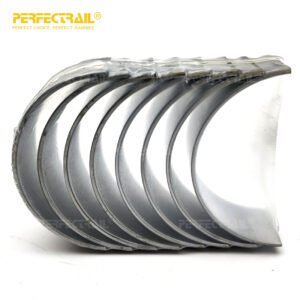
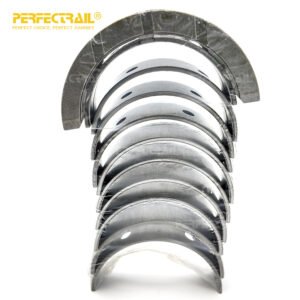
Land Rover Camshaft Bearings: The Complete B2B Engineering, Tribology & Wholesale Sourcing Guide
An in-depth metallurgical analysis, clearance calibration manual, diagnostic wear matrix, and global supply chain framework for Land Rover engine rebuilders, fleet overhaul specialists, and Tier-2 automotive distributors.
In modern internal combustion architectures, the camshaft bearing serves as the unsung pivot of valvetrain integrity, precision valve timing, and total cylinder head hydrodynamic stability. Within high-output luxury and commercial applications—most notably Jaguar Land Rover (JLR) powertrain families such as the Ingenium 2.0L (AJ200), 3.0L TDV6/SDV6 (306DT/276DT), and the legendary 5.0L Supercharged AJ133 V8—camshaft journal bearings endure extreme reciprocating dynamic loads, severe boundary friction during cold start-up cycles, elevated operating temperatures exceeding 135°C (275°F), and micro-vibrations driven by aggressive variable valve timing (VVT/VCP) solenoids.
For commercial engine rebuilders, automotive aftermarket wholesalers, and fleet maintenance procurement managers, camshaft bearing failure is rarely an isolated incident. A fractional micro-inch deviation in journal clearance, minor press-fit radial misalignment, or sub-par metallurgical composition inevitably triggers top-end oil pressure collapse, valvetrain de-synchronization, camshaft seizure, and multi-thousand-dollar catastrophic engine destruction. As global supply chains face tightening margins and increasing warranty liabilities, procuring precision-machined, IATF 16949-compliant camshaft bearings engineered specifically for Land Rover platforms is the primary operational safeguard against premature overhaul returns.
Drawing upon over 15 years of Tier-1 and OES manufacturing excellence, this comprehensive technical and commercial guide from PERFECTRAIL bridges hydrodynamic tribology, micro-clearance measurement protocols, failure root-cause analysis, and bulk supply chain strategy for Land Rover powertrain professionals worldwide.
1. Fundamentals & Hydrodynamic Wedge Tribology in Modern Internal Combustion Valvetrains
In high-performance automotive powertrains, the primary role of the camshaft journal bearing (often referred to in heavy reconditioning as a cam bushing or journal shell) is to establish a frictionless mechanical interface between the rapidly rotating steel or cast-iron camshaft and the stationary aluminum cylinder head or engine block bore. Unlike rolling-element bearings (such as ball or roller bearings), camshaft bearings in passenger and commercial luxury vehicles operate entirely on the principle of hydrodynamic fluid-film lubrication.
1.1 The Hydrodynamic Wedge Lubrication Cycle
When the engine is stationary, the weight of the camshaft and the downward force of compressed valve springs push the camshaft journal into direct mechanical contact with the lower half of the bearing shell, creating a state of boundary lubrication. As the starter motor cranks the engine, pressurized motor oil (typically delivered at 30 to 65 PSI under operating conditions) enters the bearing through precision-drilled oil galleries and indexed radial supply holes in the bearing wall.
As rotational speed increases, the viscous drag of the lubricating oil film pulls engine oil into the converging wedge-shaped clearance between the eccentric journal and the bearing bore. This rapid fluid velocity generates immense localized hydrodynamic pressure—frequently reaching localized peaks of 2,500 to 5,000 PSI (17 to 34 MPa). This hydraulic pressure completely lifts the camshaft off the metallic bearing surface, establishing full-film hydrodynamic separation. Under proper operational parameters, the rotating camshaft literally “floats” on a microscopic oil film measuring between 0.0005 inches (12.7 microns) and 0.0015 inches (38.1 microns) in thickness.
1.2 The Stribeck Curve and Operational Regimes
The tribological lifecycle of a camshaft bearing is dictated by the classical Stribeck Curve, which plots the coefficient of friction ($\mu$) against the dimensionless Hersey parameter:
- Boundary Lubrication ($\mu \approx 0.1 – 0.2$): Occurs during cold startup, start-stop engine cycling, and engine shutdown. Fluid film thickness is thinner than the combined surface roughness ($R_a$) of the journal and bearing. Microscopic asperities contact directly, relying exclusively on anti-wear additives (ZDDP, MoS2) and the bearing overlay’s sacrificial lubricity.
- Mixed Lubrication ($\mu \approx 0.02 – 0.08$): The transitional regime where the oil wedge is partially formed, supporting a fraction of the valvetrain load while occasional peak asperities still touch.
- Hydrodynamic Lubrication ($\mu \approx 0.001 – 0.005$): The optimal steady-state operational zone. The journal and bearing surfaces are 100% separated by a continuous hydrodynamic fluid barrier, resulting in near-zero mechanical wear.
2. Metallurgical Composition: Bi-Metal vs. Tri-Metal Bearing Engineering
The selection of bearing alloy architecture directly governs load-carrying capacity, fatigue resistance, thermal conductivity, conformability, and embeddability. In the heavy-duty engine reconditioning and high-performance aftermarket sectors, camshaft bearings are classified into two primary metallurgical families: Bi-Metal Alloys and Tri-Metal Multi-Layer Matrices.
2.1 Bi-Metal (Aluminum-Silicon / Aluminum-Tin) Architecture
Bi-metal camshaft bearings consist of a low-carbon steel backing plate (providing structural stiffness and press-fit hoop tension) bonded to an intermediate lining of aluminum alloyed with silicon (Al-Si), tin (Al-Sn), or lead-free bismuth.
- Embeddability & Micro-Polishing: The microscopic silicon particles dispersed within the aluminum matrix act as ultra-fine abrasive cutting tools that continually micro-polish the steel camshaft journal during operation. This prevents microscopic high spots from initiating surface galling.
- Seizure Resistance: Aluminum alloys possess natural anti-weld properties when in contact with ferrous camshaft journals, making them highly resilient against localized hot-spot adhesion during temporary oil pressure dips.
- Environmental Compliance: Bi-metal formulations are 100% lead-free, conforming strictly with European Union RoHS and REACH environmental directives for modern OEM vehicle assembly.
2.2 Tri-Metal (Steel + Copper-Lead + Babbitt/Polymer Overlay) Architecture
Tri-metal bearings represent the apex of heavy-load fatigue resistance, engineered specifically for high-cylinder-pressure turbocharged, supercharged, and commercial diesel applications. A tri-metal bearing comprises three distinct functional strata:
- Steel Backing (0.050″ – 0.090″): High-tensile structural steel providing dimensional retention, radial crush relief, and press-fit retention in the cylinder head tunnel.
- Cast Copper-Lead Intermediate Matrix (0.010″ – 0.015″): A sintered or cast copper-lead-tin alloy (Cu-Pb-Sn) delivering exceptional compressive strength (capable of withstanding dynamic cyclic loads in excess of 12,000–14,000 PSI / 82–96 MPa).
- Nickel Barrier Layer (1.0 – 2.0 microns): An ultra-thin electroplated nickel dam that prevents tin migration from the overlay into the copper intermediate matrix over thousands of thermal cycles.
- Electroplated Babbitt or MoS2 Polymer Overlay (12 – 20 microns): A soft lead-tin-copper or advanced PTFE/polyimide-solid lubricant top layer providing unmatched conformability to journal misalignments and foreign particulate embeddability.
Table 2.1: Metallurgical & Performance Matrix: Bi-Metal vs. Tri-Metal Bearing Shells
| Engineering Property | Bi-Metal (Al-Sn / Al-Si) | Tri-Metal (Cu-Pb-Sn + Babbitt) | Polymer Coated Tri-Metal |
|---|---|---|---|
| Fatigue Load Capacity | Medium (6,000 – 8,500 PSI) | High (10,000 – 12,500 PSI) | Extreme (14,000+ PSI) |
| Conformability to Misalignment | Moderate | Superior (Soft Babbitt layer) | Superior + Self-Lubricating |
| Embeddability of Debris | High (Absorbs fine particles) | Very High (Deep penetration) | Very High |
| Thermal Conductivity | High ($180 – 220\ \text{W/m}\cdot\text{K}$) | Very High ($280 – 320\ \text{W/m}\cdot\text{K}$) | High (Rapid dissipation) |
| Dry Cold-Start Wear Resistance | Moderate | Good | Maximum (PTFE sacrificial dry film) |
| Optimal Land Rover Application | Naturally Aspirated & Standard 2.0L | TDV6 / SDV6 Commercial Diesel | 5.0L Supercharged V8 / Off-Road Heavy Duty |
3. Land Rover Engine Valvetrain Architecture & Platform-Specific Vulnerabilities
Land Rover powerplants are celebrated for their sophisticated double overhead camshaft (DOHC), multi-stage variable camshaft timing (VCT), and variable valve lift systems. However, these complex architectures impose severe tribological stresses on camshaft bearings. In the global engine reconditioning industry, specific JLR engine families exhibit well-documented valvetrain vulnerability patterns.
3.1 JLR 3.0L TDV6 / SDV6 (276DT / 306DT Engine Platforms)
Fitted across thousands of Range Rover Sport, Discovery 3, Discovery 4, and Range Rover Vogue models, the twin-turbocharged 2.7L and 3.0L diesel engines operate with high peak cylinder combustion pressures. While crankcase main bearing rotation is well known in the trade, upper valvetrain camshaft bearing wear is a critical co-factor in catastrophic engine seizure.
The TDV6 cylinder head features integrated camshaft carrier journals. When engine oil becomes degraded through extended 15,000+ mile service intervals or DPF diesel fuel dilution, the high-pressure fuel pump (HPFP) drive load mounted at the rear of the left-hand camshaft imposes an aggressive radial side-load. This induces rapid asymmetric bearing wear on Journal #4, resulting in severe oil pressure bleed-off that starves the crankshaft big-end journals down-circuit.
3.2 JLR AJ133 5.0L V8 & AJ126 3.0L Supercharged V6 Platforms
The 5.0-liter AJ133 quad-cam V8 utilizes hydraulically actuated Camshaft Torque Actuated (CTA) variable valve timing units capable of advancing or retarding cam phasing at rates exceeding 150 crank degrees per second.
- VVT Oil Pressure Demands: The CTA phasers consume massive instantaneous volumes of engine oil directly from the front camshaft bearing journals (Journal #1). If the clearance of Journal #1 expands past 0.0028 inches due to abrasive wear, hydraulic pressure to the cam phaser drops below the minimum 1.2 bar threshold at idle.
- Timing Chain Slap Dynamics: Excessive cam bearing radial play induces harmonic resonance through the timing chain guides, accelerating plastic tensioner arm fracture and inducing timing chain elongation.
3.3 JLR 2.0L Ingenium (AJ200 Diesel & Petrol Families)
Engineered with weight reduction as a priority, the modular Ingenium cylinder head incorporates needle roller bearings on exhaust camshafts and ultra-narrow hydrodynamic bearing sleeves on intake camshafts with variable valve lift (UniAir electro-hydraulic actuation).
Due to tight oil feed galleries (often smaller than 1.5 mm in internal diameter), any carbon particulate accumulation or thermal oil breakdown causes immediate micro-starvation. Rebuilding Ingenium cylinder heads requires precision-machined replacement bearing shells with exact laser-cut oil metering orifices to maintain hydraulic balance across the UniAir valve actuators.
Table 3.1: Land Rover Engine Family Camshaft Journal & Bearing Specifications
| Engine Code / Name | Displacement & Layout | Journal Nominal Dia. | Standard Oil Clearance | Max Service Limit | PERFECTRAIL Part Series |
|---|---|---|---|---|---|
| AJ133 / 508PS | 5.0L Supercharged / NA V8 | 27.960 – 27.980 mm | 0.030 – 0.062 mm | 0.075 mm | PR-CB-AJ133-STD |
| AJ126 / 306PS | 3.0L Supercharged V6 | 27.960 – 27.980 mm | 0.030 – 0.062 mm | 0.075 mm | PR-CB-AJ126-STD |
| 306DT / SDV6 | 3.0L Twin-Turbo Diesel V6 | 29.955 – 29.975 mm | 0.035 – 0.068 mm | 0.080 mm | PR-CB-306DT-SET |
| AJ200D / Ingenium | 2.0L Turbo Diesel I4 | 25.965 – 25.985 mm | 0.025 – 0.052 mm | 0.065 mm | PR-CB-ING20D-HD |
4. Precision Engineering: Tolerances, Clearances & Critical Oil Hole Indexing
Precision engine reconditioning requires exact measurement across three orthogonal planes. In automotive camshaft bearing replacement, deviations as small as 0.0002 inches (5 microns) determine the boundary between long-term operational reliability and rapid failure.
4.1 The Rule of Thumb for Camshaft Bearing Clearances
Engine building science dictates the foundational clearance equation for hydrodynamic journal bearings:
For a typical Land Rover 28.00 mm (1.1023 in) camshaft journal, the optimal assembled clearance range is 0.0011″ to 0.0022″ (0.028 mm to 0.056 mm).
- Risks of Insufficient Clearance (< 0.0008″ / 0.020 mm): Inadequate hydrodynamic oil flow leads to severe thermal expansion mismatch. As the steel camshaft heats and expands faster than the oil can remove thermal energy, the oil film shears, resulting in metal-to-metal galling and instantaneous camshaft seizure.
- Risks of Excessive Clearance (> 0.0032″ / 0.081 mm): Hydrodynamic pressure drops exponentially with clearance cubed ($\Delta P \propto 1/c^3$). The bearing cannot maintain the lubricating oil wedge, causing the camshaft to knock against the bearing shell, triggering VVT timing codes, and starving the lower crankcase of vital engine oil volume.
4.2 Oil Hole Radial Indexing & Annular Grooving
One of the most frequent installation errors encountered in warranty claims is bearing oil hole misalignment. Camshaft bearings are press-fit into the cylinder head or block tunnel. The radial lubrication hole in the bearing shell must align precisely with the oil supply passage from the main oil gallery.
All PERFECTRAIL Land Rover camshaft bearings feature full 360-degree internal annular oil distribution grooves or precision teardrop-shaped oil feeding recesses. This design ensures 100% unrestricted hydrodynamic oil volume delivery to the journal regardless of minor installation angle variance during high-speed production line press-fitting.
5. Comprehensive Diagnostic Guide: 7 Primary Camshaft Bearing Failure Modes
When conducting warranty analysis or engine failure forensics, understanding bearing wear patterns provides definitive physical evidence of the root operating pathology. Below is the comprehensive forensic diagnostic matrix used by Tier-1 metallurgists and master engine reconditioners.
5.1 Foreign Particle Contamination & Abrasive Scoring
- Physical Appearance: Concentric circumferential scratches, embedded metallic or silicon debris in the soft overlay, and localized scoring along the journal sweep path.
- Root Mechanism: Oil filtration breakdown or residual machining swarf from cylinder head reconditioning circulating in the lubrication circuit. Particles larger than the minimum oil film ($>15\ \mu\text{m}$) breach the hydrodynamic wedge and abrade both bearing and journal.
- Corrective Action: Ultrasonic cleaning of all oil galleries; flushing oil coolers; upgrading to high-efficiency micron-rated oil filters.
5.2 Oil Starvation & Boundary Metal-to-Metal Wiping
- Physical Appearance: Extreme surface overheating discoloration (straw brown to blue/black steel backing), melting or displacement of the Babbitt/polymer overlay, micro-welding, and severe rotational tearing.
- Root Mechanism: Interrupted oil delivery due to oil pump pickup sludge blockage, failed VVT solenoids, or misaligned oil holes during bearing insertion.
- Corrective Action: Verify oil pump relief valve calibration, clear cylinder head oil restrictors, and strictly verify oil hole alignment upon installation.
5.3 Misalignment, Journal Taper & Edge Loading
- Physical Appearance: Asymmetrical, diagonal, or one-sided wear concentrated entirely along the axial edges of the bearing shell, while the opposite side shows negligible contact.
- Root Mechanism: Bent camshaft (often caused by valvetrain crash after timing chain failure), warped cylinder head casting due to severe engine overheating, or non-concentric line-boring.
- Corrective Action: Check camshaft runout on V-blocks (maximum allowable total indicated runout: 0.0008″ / 0.020 mm); perform precision line-honing of the cylinder head camshaft tunnel.
5.4 Surface Fatigue Spalling & Micro-Pitting
- Physical Appearance: Flaking, micro-cratering, and spider-web fracturing of the bearing lining surface, exposing the copper-lead matrix or intermediate layer.
- Root Mechanism: Dynamic cyclic loading exceeding the fatigue strength rating of the bearing alloy. Commonly observed in aggressively tuned or re-mapped Land Rover TDV6/SDV6 engines running excessive boost and fuel injection pressures.
- Corrective Action: Upgrade from standard bi-metal bearings to high-strength tri-metal or polymer-coated performance bearing shells.
5.5 Cavitation Erosion
- Physical Appearance: Localized honeycomb-like pitting located directly adjacent to oil feed holes or in the low-pressure unloaded relief zones of the bearing shell.
- Root Mechanism: Rapid pressure drops within the oil film cause dissolved air/vapor bubbles to form and violently collapse against the bearing wall, generating shockwaves that mechanically erode the overlay.
- Corrective Action: Optimize oil viscosity rating (avoiding excessively thin oils at high track/towing temperatures); radius and deburr oil supply hole edges.
5.6 Backside Fretting & Loss of Press-Fit Interference
- Physical Appearance: Dark, polished, or oxidized black/rust-colored patches on the outer steel backing diameter of the bearing shell, accompanied by loose fit in the housing bore.
- Root Mechanism: Inadequate press-fit interference (undersized bearing OD or oversized cylinder head housing bore), allowing micro-motion of the bearing within the housing during valvetrain oscillation.
- Corrective Action: Inspect housing bore diameter; replace stretched bearing caps; utilize precision-sized PERFECTRAIL oversize outer diameter (+0.05 mm) service shells.
5.7 Chemical Corrosion & Acid Etching
- Physical Appearance: Dull, grey, or darkened porous surface with microscopic leaching of the lead phase in copper-lead bearings, leaving a fragile spongy copper structure.
- Root Mechanism: Acidic moisture accumulation resulting from degraded engine oil, blow-by gases, and extended service intervals.
- Corrective Action: Implement rigorous oil change intervals and utilize high Total Base Number (TBN) synthetic lubricants.
Table 5.1: Quick Diagnostic Matrix for Engine Rebuilders
| Visual Defect Pattern | Primary Physical Root Cause | Typical Engine Fault Code / Symptom | Reconditioning Solution |
|---|---|---|---|
| Circular Grooves / Scoring | Foreign Debris in Oil Supply | Oil filter pleat metal flakes | Flush oil galleries; polish cam journals |
| One-Sided Diagonal Wear | Bent Camshaft or Warped Head | Valvetrain ticking; hard turning | Straighten cam; line-bore cam tunnels |
| Overlay Melting / Seizure | Zero Oil Pressure / Misaligned Hole | DTC P0011 / P0016 / Seized Engine | Replace cam, bearings & check pump |
| Honeycomb Flaking / Spalling | Extreme Dynamic Cyclic Overload | Low top-end oil pressure at warm idle | Install Tri-Metal High-Load Bearings |
6. Professional Workshop Protocols: Removal, Line-Boring & Installation Standards
Achieving factory-grade precision when overhauling Land Rover cylinder heads requires specialized machine-shop tooling and rigorous adherence to assembly sequences. Below are the mandatory technical steps prescribed for engine reconditioning workshops.
6.1 Specialized Camshaft Bearing Extraction & Installation Tools
Never use generic mechanical punches or hammer drifts to drive camshaft bearings into cylinder heads. Camshaft bearing shells have thin steel walls that buckle or deform instantly under uncontrolled point impact.
- Expanding Mandrel Installers: Utilize a dedicated mechanical or hydraulic camshaft bearing installation tool equipped with neoprene-backed expanding drive collars that apply 360-degree uniform radial support across the bearing shell’s interior diameter during insertion.
- Alignment Guide Cones: Ensure front and rear guide cones are firmly locked into adjacent journal tunnels to maintain perfect coaxial insertion alignment.
6.2 Step-by-Step Installation Protocol
- Tunnel Inspection & Cleaning: Thoroughly clean the cylinder head bearing bores with solvent. Measure bore diameter with an internal dial bore gauge at 3 positions (front, center, rear) to verify roundness and detect any bore taper (maximum allowable out-of-round: 0.0003″ / 0.0076 mm).
- Pre-Lubrication: Apply a light film of clean engine assembly lube (high-zinc ester base) to the bearing housing bore. Avoid heavy grease behind the bearing shell, which creates a thermal barrier and alters press-fit crush height.
- Oil Port Alignment: Carefully sight through the oil feed gallery using an LED bore-scope. Align the bearing’s oil supply aperture perfectly with the cylinder head gallery. Scribe an alignment reference mark on the tool mandrel and cylinder head face before pressing.
- Press Insertion: Smoothly press the bearing into the housing bore in a single continuous stroke until the precise axial depth is reached.
- Post-Installation Clearance Measurement: After installation, measure the assembled bearing inside diameter (ID) using an internal micrometer or bore gauge calibrated to zero against the matching camshaft journal diameter.
6.3 Plastigauge Verification Technique
For quick verification in workshop assembly bays, precision Plastigauge (Green range: 0.001″ to 0.003″ / 0.025 mm to 0.076 mm) provides an essential secondary check:
- Thoroughly clean all oil from journal and bearing surfaces.
- Lay a clean strip of Plastigauge axially across the center of each camshaft journal.
- Fit the camshaft bearing caps and torque all fasteners to exact factory staging specifications (e.g., JLR AJ133 Cam Cap Stage 1: 5 Nm, Stage 2: 10 Nm, Stage 3: +45 degrees). DO NOT ROTATE THE CAMSHAFT.
- Remove caps and measure the flattened Plastigauge width using the calibrated scale card to verify clearance uniformity across all journals.
7. Quality Assurance, IATF 16949 Manufacturing & Testing Rigor
In the international automotive wholesale trade, the difference between reputable Tier-1/OES grade components and cheap sub-standard aftermarket replicas lies in metallurgical consistency, dimensional control, and automated quality verification.
7.1 IATF 16949 & ISO 9001:2015 Certification Protocols
All engine bearings supplied by PERFECTRAIL are produced in manufacturing facilities certified under IATF 16949—the highest automotive quality management standard globally. This guarantees strict process stability across five key manufacturing stages:
- Continuous Strip Bimetal Cladding / Sintering: Automated thermal diffusion bonding ensuring 100% shear bond strength between the steel backing and alloy lining.
- CNC High-Precision Broaching: Diamond-tooled broaching machines holding wall thickness tolerances to within ±0.00008 inches (±2.0 microns) across multi-thousand unit production batches.
- Optical & Coordinate Measuring Machine (CMM) Verification: Automated 100% laser inspection of radial oil holes, crush height, and axial width.
7.2 Laboratory Testing & Material Validation Protocols
To guarantee zero field-failure rates under extreme operating conditions, PERFECTRAIL bearings undergo four mandatory metallurgical and mechanical laboratory audits:
- Spectrometric Chemical Analysis (OES): Verifying exact elemental concentrations of Copper, Tin, Lead, Silicon, and Aluminum against strict SAE and DIN standards (e.g., SAE 788, SAE 792, DIN ISO 4381).
- Micro-Vickers Hardness Testing (HV0.1): Ensuring optimal surface overlay softness ($15 – 22\ \text{HV}$) for embeddability and robust intermediate matrix hardness ($85 – 110\ \text{HV}$) for load retention.
- Ultrasonic Bond Integrity Inspection: Continuous scanning to eliminate any risk of interlayer lamination or micro-voids between steel and alloy strata.
- Salt Spray & Corrosion Testing (ASTM B117): 240-hour neutral salt spray exposure validating anti-oxidation shelf life during trans-oceanic shipping.
8. PERFECTRAIL Global B2B Supply Chain, Catalog Matrix & Procurement Solutions
As an international supplier specializing in Land Rover OEM and genuine-grade aftermarket parts, PERFECTRAIL serves an extensive global network of professional engine rebuilders, spare parts importers, regional distributors, and fleet overhaul centers across Europe, North America, the Middle East, Australia, and Southeast Asia.
8.1 Comprehensive Land Rover Camshaft Bearing Catalog & Cross-Reference Matrix
We maintain extensive, ready-to-ship inventories of camshaft bearing sets across all standard (STD) and rebuilder undersize (+0.25mm / +0.50mm) dimensions.
| PERFECTRAIL SKU | JLR OEM Part Cross-Ref | Target Vehicle Applications | Material Type | Available Sizing | Wholesale Packaging |
|---|---|---|---|---|---|
| PR-LR-CB508-STD | LR010775 / LR038165 | Range Rover 5.0L V8 Supercharged (2010-2023) | Polymer Tri-Metal | STD, +0.25, +0.50 | 10 Sets/Carton (VCI Sealed) |
| PR-LR-CB306-SET | LR009587 / LR078894 | Discovery 4 / RR Sport 3.0L TDV6/SDV6 | Heavy-Duty Tri-Metal | STD, +0.25 | 12 Sets/Carton (VCI Sealed) |
| PR-LR-CB20D-ING | LR073809 / LR115456 | Range Rover Evoque / Velar / Discovery Sport 2.0D | High-Grade Bi-Metal | STD | 20 Sets/Carton (VCI Sealed) |
| PR-LR-CB276-STD | 1316113 / 1316114 | Discovery 3 / Range Rover Sport 2.7L TDV6 | Heavy-Duty Tri-Metal | STD, +0.25, +0.50 | 12 Sets/Carton (VCI Sealed) |
8.2 B2B Supply Chain Advantages & Export Packaging Standards
- Flexible Minimum Order Quantities (MOQs): Low entry barriers for trial batches starting at only 50 sets per SKU, scaling to multi-thousand containerized shipments for national distributors.
- VCI Anti-Corrosion Protection: Every bearing set is sealed in specialized Volatile Corrosion Inhibitor (VCI) hermetic blister packaging, guaranteeing 36+ months of rust-free shelf storage in high-humidity maritime logistics environments.
- Private Label & Custom Branding: Full OEM custom box design, laser-etched batch numbering, and customized rebuilder packaging options available for brand owners.
- Comprehensive Land Rover Valvetrain Ecosystem: One-stop consolidation with matching camshafts, timing chain kits, hydraulic tappets, rocker arms, and cylinder head bolts to reduce freight overhead and customs documentation friction.
9. Frequently Asked Questions (FAQ Technical Module)
Authoritative technical answers to common engineering, installation, and procurement questions encountered by engine reconditioning facilities and automotive parts distributors.
Q1: What are the standard camshaft bearing oil clearances for Land Rover Ingenium 2.0L and TDV6 engines?
For Land Rover Ingenium 2.0L (AJ200) engines, nominal camshaft journal oil clearance is 0.025 mm to 0.052 mm (0.0010 in to 0.0020 in) with a maximum allowable service wear limit of 0.070 mm (0.0028 in). For JLR 2.7L/3.0L TDV6/SDV6 (276DT/306DT) and AJ133 5.0L V8 platforms, standard oil clearance ranges between 0.030 mm and 0.065 mm (0.0012 in to 0.0025 in). Clearances exceeding 0.080 mm cause severe top-end oil pressure loss, erratic VVT operation, and premature valvetrain failure.
Q2: Why do bi-metal aluminum-silicon bearings differ from tri-metal copper-lead bearings in Land Rover rebuilds?
Bi-metal bearings utilize an aluminum-silicon alloy bonded to steel, providing high seizure resistance, fine particulate embeddability, and lead-free environmental compliance. Tri-metal bearings feature a steel back, cast copper-lead intermediate layer, and an electroplated Babbitt/polymer overlay. Tri-metal bearings provide significantly higher fatigue strength (up to 12,000–14,000 PSI) and conformability, making them essential for high-load turbocharged and supercharged Land Rover engines such as the AJ133 5.0L Supercharged V8 and tuned 3.0L TDV6 diesels.
Q3: How does incorrect camshaft bearing oil hole indexing cause catastrophic engine failure?
If the bearing shell’s oil hole is misaligned with the cylinder head gallery by more than 1.0 mm (or >15 degrees of radial rotation), hydrodynamic oil flow is severely choked. This induces instantaneous boundary friction upon initial startup, rapid localized overheating, overlay wiping, bearing spinning in the housing, and complete valvetrain seizure within fewer than 50 operational hours.
Q4: What are the common symptoms of camshaft bearing failure in Range Rover and Discovery vehicles?
The primary indicators include a persistent metallic upper-valvetrain tapping noise that intensifies as engine oil reaches full operating temperature, an illuminated low oil pressure warning light at warm idle, camshaft position timing correlation Diagnostic Trouble Codes (DTC P0011, P0016, P0017), fine bronze or aluminum shimmer in the engine oil filter pleats, and accelerated timing chain guide wear.
Q5: What wholesale supply options, MOQs, and customizations does PERFECTRAIL provide for B2B clients?
PERFECTRAIL supplies Standard (STD), +0.25mm (+0.010 in), and +0.50mm (+0.020 in) undersized camshaft bearings for all major Land Rover platforms. We support global distributors with flexible MOQs starting at 50–100 engine sets, IATF 16949 certified quality assurance, custom private-label packaging and laser engraving, VCI hermetic rust protection, and expedited global air or sea freight consolidation.
Global B2B Wholesale & Distribution Partnership
Upgrade Your Land Rover Powertrain Overhaul Reliability
Eliminate valvetrain warranty claims with IATF 16949-certified camshaft bearings engineered specifically for Land Rover AJ133, TDV6, and Ingenium powertrains. Connect directly with the PERFECTRAIL engineering and export sales group to request comprehensive wholesale price lists, technical specification sheets, or custom OEM manufacturing quotes.
✓ 100% Ultrasonic Bond Inspected
✓ Low Batch MOQs (50+ Sets)
✓ Global Maritime & Air Express Fulfillment