The Ultimate B2B Guide to Land Rover Camshafts: Design, Reliability, Fitment, and Wholesale Sourcing
The lede: A camshaft is one of the most timing-sensitive components in an internal-combustion engine. It determines when the intake and exhaust valves open, how far they move, and how long they remain open. For a Land Rover parts wholesaler, however, a camshaft is more than an internal engine component: it is a high-consequence SKU that affects engine rebuilding accuracy, workshop reputation, warranty exposure, and customer downtime.
This guide explains how camshafts work, why profile and material matter, how technicians diagnose wear, how buyers verify fitment, and how B2B distributors can build a dependable sourcing program. It is written for independent Land Rover workshops, importers, engine rebuilders, regional distributors, and procurement teams looking for a technically informed aftermarket partner. PERFECTRAIL is presented here according to the capabilities described on its public website: Land Rover specialization, OEM and aftermarket replacement parts, product consultation, low-MOQ support, global supply, OEM/ODM assistance, quality-control processes, and a published 12-month warranty for its parts program. Specific camshaft fitment should always be confirmed by VIN, engine code, OE number, and production specification before ordering.
1. Global Market Opportunity for Land Rover Camshafts
The Land Rover aftermarket is unusually diverse. It includes modern luxury SUVs with sophisticated variable valve timing, older utility vehicles that remain active in demanding environments, and a large population of vehicles maintained by independent workshops after the original warranty period. That mix creates several types of demand for camshafts: scheduled engine rebuilds, repair after lubrication failure, restoration of older vehicles, performance-related replacement, and stock replenishment for fast-moving engine families.
For B2B buyers, the opportunity is not created by the camshaft alone. A camshaft replacement commonly sits inside a wider repair order that may include cam followers, tappets, rocker components, timing-chain or belt parts, bearings, seals, gaskets, an oil pump, and fasteners. A supplier that understands this wider repair context can help a distributor reduce purchasing friction and create more useful product bundles. It can also reduce the risk that a new camshaft is installed alongside worn valve-train parts that immediately damage its working surfaces.
The best commercial strategy is therefore consultative rather than purely transactional. A buyer should be able to send a VIN, engine code, OE reference, photographs, or a workshop diagnosis and receive a clear confirmation of the required specification. This is particularly important for Land Rover because similar model names may cover different engines, model years, emissions specifications, drive configurations, and timing systems. A visually similar camshaft is not necessarily an interchangeable camshaft.
Why camshaft sourcing creates commercial risk
A wrong exterior component is usually discovered during a basic fitment check. A wrong camshaft can create a more expensive problem: it may install but deliver the wrong valve timing, oil-control behavior, sensor relationship, or lift characteristics. The resulting symptoms can be mistaken for a timing error, a sensor fault, poor compression, or fuel-system trouble. For a wholesaler, this increases technical support time, returns, freight expense, and reputational risk.
That is why a B2B landing page should explain the decision process instead of repeating a short product description. Search users who type phrases such as “Land Rover camshaft supplier,” “camshaft replacement,” “camshaft symptoms,” or “camshaft OE cross reference” may be at different stages of the buying journey. A useful article serves each stage: it answers the basic question, supports diagnosis, explains specification, and offers a direct route to a quote.
B2B takeaway: Camshafts should be positioned as precision engine components that require verified fitment and a supporting valve-train plan. Competing on unit price alone exposes both the buyer and supplier to avoidable warranty risk.
2. How a Camshaft Works Inside the Valve Train
The camshaft converts rotational movement into controlled valve movement. Its lobes press against a follower, tappet, rocker arm, or bucket arrangement, depending on the engine design. As the lobe rotates away from the base circle, the valve train rises and opens a valve. As the lobe returns toward the base circle, the valve spring closes the valve. This cycle must occur in a precise relationship with piston position, ignition or injection timing, and crankshaft rotation.
In a four-stroke engine, the camshaft turns at half the speed of the crankshaft. That relationship allows the intake and exhaust valves to open once during the complete four-stroke cycle. The crankshaft provides the reference for piston movement; the camshaft provides the reference for breathing. If the relationship between the two shafts is incorrect, the engine may run poorly, fail to start, produce abnormal emissions, or suffer contact between valves and pistons in an interference design.
The cam lobe: lift, duration, and opening rate
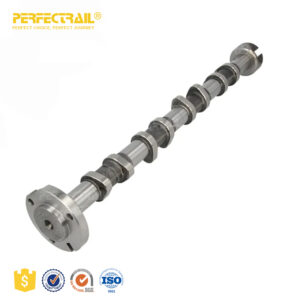
A cam lobe is not simply a round bump. Its geometry controls several events. Lift describes how far the valve is opened through the valve-train ratio. Duration describes how long the valve remains above a defined lift threshold. The flank controls how quickly the follower rises and falls, while the nose influences the period around maximum lift. The base circle controls the closed-valve portion of the cycle and influences valve-clearance measurement.
Engine designers balance these variables against torque requirements, emissions, fuel economy, noise, durability, and available space. A profile designed for a high-revving application may not be suitable for a heavy SUV that needs low-speed torque. Likewise, an aftermarket camshaft intended for a specific engine family must reproduce the original timing events closely unless the application explicitly calls for a calibrated performance change.
The relationship between camshaft and crankshaft
The camshaft and crankshaft are synchronized through a timing belt, timing chain, or gear drive. The timing system determines when the camshaft reaches each lobe position. A worn chain, damaged tensioner, incorrectly installed belt, or slipped sprocket can create symptoms that look like a camshaft problem. Conversely, a damaged camshaft can overload followers and contribute to timing noise or metal contamination in the lubrication system.
A professional diagnosis therefore treats the camshaft as one element of a system. The inspection should consider timing marks, phase data, compression, oil pressure, valve clearance, follower condition, bearing surfaces, sensor signals, and lubrication quality. Replacing the camshaft without identifying the original cause can lead to repeat failure.
Installation note: The exact assembly procedure, torque values, lubrication requirements, timing alignment, and break-in process must follow the applicable engine service information. This article supports purchasing decisions; it does not replace the manufacturer’s repair manual.
3. Land Rover Applications and Fitment Logic
Land Rover buyers often begin with a vehicle name, but a professional supplier must finish with a verified application. Defender, Range Rover, Discovery, and Freelander are model families rather than single specifications. Within one family, engines can differ by displacement, cylinder count, fuel type, aspiration, emissions system, model year, market, and valve-train arrangement. The same body style may therefore use different camshaft references.
For a B2B order, the minimum fitment record should include the vehicle model, model year, engine code, fuel type, left-hand or right-hand drive where relevant to the surrounding installation, VIN, OE reference, and the position of the component. Some engines use separate intake and exhaust camshafts; others use a single camshaft or different banks with distinct references. A buyer should not rely on a marketplace photograph, a short description, or an approximate year range when a complete engine rebuild is involved.
VIN, engine code, and OE cross-reference
A VIN is the strongest starting point because it can identify the vehicle configuration and production context. The engine code narrows the mechanical application, while the OE number helps establish the original design reference. Cross-reference data is valuable, but it must be treated as a verification aid rather than a substitute for fitment confirmation. Numbers can be superseded, market-specific, or associated with more than one supplier reference.
PERFECTRAIL’s public website describes a product-consultation approach and the use of compatibility software and industry knowledge to advise customers on suitable Land Rover parts. In a camshaft enquiry, the most efficient workflow is to send the full vehicle and engine information before requesting a price. This lets the supplier confirm whether the part is a direct replacement, whether additional valve-train parts are recommended, and whether the requested quantity can be supported from stock or production.
Model-family content for search and conversion
A strong SEO page can capture model-family searches without making unsupported claims. Use phrases such as “Land Rover camshaft supplier,” “Defender engine parts,” “Range Rover valve-train components,” “Discovery camshaft replacement,” and “Freelander engine rebuild parts” in relevant headings and internal links. Then qualify every product-level statement with the need for VIN or OE confirmation. This gives search engines clear topical relevance while protecting B2B buyers from false universal fitment.
- Defender: Emphasize durability, fleet uptime, off-road operating conditions, and the importance of correct low-speed engine behavior.
- Range Rover: Emphasize refinement, NVH control, variable valve timing compatibility, and complete repair documentation.
- Discovery: Emphasize workshop diagnosis, mixed vehicle fleets, and the need to verify engine generation before ordering.
- Freelander: Emphasize long-term maintenance, engine rebuild support, and cross-referencing by engine code and production year.
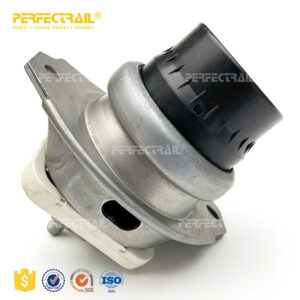
This approach also supports internal linking. A camshaft article can link to the appropriate Defender, Range Rover, Discovery, and Freelander category pages, as well as related engine parts such as timing components, bearings, gaskets, and engine mounts. Those links help users continue their buying journey and help search engines understand the topical relationship between the article and the product catalogue.
4. Camshaft Engineering, Profiles, and Materials
Camshaft quality is determined by the interaction of geometry, metallurgy, surface treatment, dimensional control, and lubrication. A part may have the correct overall length and mounting points while still failing because the lobe profile, journal size, hardening depth, or oil-hole position is incorrect. For B2B procurement, this is why technical documentation and inspection evidence matter more than a polished product photograph.
Cast, forged, and billet construction
Camshafts may be produced from different materials and manufacturing routes according to engine requirements and production volume. Cast camshafts can provide an economical solution when the design and material are correctly controlled. Forged components can offer a favorable strength structure for demanding applications. Billet camshafts are machined from a solid blank and are common in specialist performance work, where the manufacturer needs flexibility in profile development.
No single manufacturing route automatically makes a camshaft suitable for every engine. The correct decision depends on the original specification, load, speed range, lobe pressure, follower design, oil supply, and expected service conditions. A buyer should request the supplier’s stated application and quality documentation rather than assuming that a “forged” or “billet” label alone guarantees compatibility.
Surface hardness and wear resistance
The lobe and journal surfaces operate under repeated contact stress. If surface hardness is too low, the lobe can develop pitting, scoring, or loss of profile. If the surface treatment is poorly controlled, it may crack, distort the component, or create a transition that accelerates wear. Common engineering approaches include induction hardening, nitriding, carburizing, or controlled chilled-iron structures, depending on the material and design.
The treatment must be compatible with the mating component. A hardened cam lobe cannot compensate for a damaged follower, contaminated oil, blocked gallery, incorrect valve clearance, or a weak spring. In the same way, an excellent follower cannot save a camshaft with the wrong profile. The entire contact pair must be considered during a replacement decision.
Oil control and journal design
Camshaft journals and oil passages distribute lubrication across the rotating component and its associated valve train. Correct gallery alignment is essential. A passage that is blocked, incorrectly positioned, or poorly finished can starve the lobe or bearing surface. During an engine rebuild, the oil system should be cleaned and primed, and the cause of any previous lubrication failure should be identified before the new camshaft is installed.
| Inspection area | What the buyer should verify | Why it matters |
|---|---|---|
| Lobe profile | Application-specific lift, duration, and timing | Controls breathing, torque, emissions, and valve clearance |
| Journal dimensions | OE-equivalent diameter and finish | Maintains oil film and prevents premature scoring |
| Surface treatment | Defined hardness and process consistency | Protects against repeated contact fatigue |
| Oil passages | Correct location, cleanliness, and edge finish | Supports lubrication throughout the valve train |
5. Failure Symptoms and Professional Diagnosis
Searchers often begin with a symptom query: “What are the signs of a bad camshaft?” That intent is valuable, but symptoms overlap with many other engine faults. A reliable article must explain the symptom while warning the reader that diagnosis requires testing. This prevents unnecessary part replacement and gives workshops a more credible technical resource.
Common symptoms associated with camshaft or valve-train problems
- Engine misfire: A worn lobe or valve-train component can reduce valve movement and affect cylinder filling.
- Rough idle: Uneven valve timing or compression can produce an unstable idle, but ignition, fueling, vacuum, and sensor faults can create the same result.
- Loss of power: A damaged cam profile may limit airflow, especially under load or at a particular engine speed.
- Ticking or tapping: Noise may come from a cam lobe, follower, hydraulic lash adjuster, chain, tensioner, or low oil pressure.
- Check-engine light: Variable valve timing or camshaft-position faults may set diagnostic codes, but a code identifies a circuit or correlation problem rather than proving the camshaft itself is damaged.
- Hard starting or stalling: Incorrect cam timing or a damaged position signal may affect synchronization between the engine control unit and crankshaft.
- Metal in engine oil: Ferrous particles or surface debris may indicate wear inside the valve train and should trigger immediate inspection.
A practical diagnostic sequence
- Confirm the customer complaint. Record when the noise, misfire, or loss of power appears: cold start, idle, acceleration, high RPM, or after warm-up.
- Scan for diagnostic codes and live data. Compare camshaft and crankshaft correlation, variable valve timing command, and actual position where the diagnostic platform supports it.
- Check oil level and pressure. Low oil pressure, incorrect viscosity, contamination, or a blocked filter can damage the camshaft and hydraulic components.
- Inspect timing alignment. Verify belt, chain, sprocket, guides, tensioner, and timing marks before condemning the camshaft.
- Measure compression or perform leak-down testing. These tests help separate valve-train problems from fueling or ignition faults.
- Inspect the valve train. Look for lobe pitting, scoring, abnormal polishing, follower damage, lash-adjuster collapse, and unusual wear patterns.
- Identify the root cause. Do not install a new camshaft into a contaminated or poorly lubricated engine without correcting the underlying system problem.
Workshop warning: A camshaft position sensor code does not automatically mean that the camshaft needs replacement. The sensor, wiring, timing drive, reluctor, oil control valve, and mechanical timing must be checked before a parts decision is made.
For a B2B supplier, this diagnostic logic is commercially useful. It can be turned into a downloadable workshop checklist, a product-page FAQ, or a service advisor handout. That type of content supports E-E-A-T because it helps the reader make a better decision rather than pushing an unverified sale.
6. How B2B Buyers Should Select a Replacement Camshaft
A professional replacement decision should start with application data, then move through technical specification, quality evidence, commercial terms, and after-sales support. The cheapest quotation is not necessarily the lowest total cost. A camshaft that creates a return, delays a rebuild, or damages mating components can be more expensive than a correctly specified component with a stronger support package.
Step one: define the exact application
Provide the supplier with the VIN, engine code, model, production year, fuel type, position, OE number, and any available photographs. If the engine has been rebuilt or modified, state that information clearly. A performance camshaft, remanufactured unit, standard replacement, and upgraded component are different purchasing categories.
Step two: ask for the full replacement scope
Ask whether the recommended camshaft should be installed with new followers, tappets, rocker arms, bearings, seals, timing hardware, or other related components. The answer depends on the engine and condition, but the question itself is essential. Reusing a damaged contact component is a common route to repeat camshaft wear.
Step three: review technical evidence
A B2B buyer should request dimensional information, material or treatment description where appropriate, inspection records, packaging specifications, and applicable warranty terms. The evidence should be consistent with the intended application. Do not publish or promise specific test results unless the supplier has provided them and the buyer is authorized to use them.
Step four: calculate total landed cost
Calculate the unit price, packaging, freight, customs, local handling, inspection, warranty reserve, and expected return cost. PERFECTRAIL publicly presents low MOQ, stock availability, product consultation, and global delivery support. Those capabilities can be valuable for a distributor that wants to test a new camshaft SKU before committing to a full container. The exact commercial offer still needs to be confirmed for each order.
A buyer’s pre-order checklist
- Have we confirmed VIN, engine code, OE reference, and camshaft position?
- Is the part standard replacement, remanufactured, or performance-oriented?
- Are the mating valve-train components included or separately available?
- What inspection and packaging information is available?
- What are the MOQ, lead time, payment, Incoterms, and warranty terms?
- Can the supplier support mixed-SKU purchasing and future replenishment?
7. Quality Assurance, Inspection
PERFECTRAIL’s public website positions the company as a Land Rover parts specialist with OEM and aftermarket products, technical consultation, OEM/ODM support, quality-control processes, and a published warranty program. It also states that the company supplies parts for Defender, Range Rover, Discovery, and Freelander. These are appropriate trust signals for a B2B camshaft page, provided they are linked to the relevant company or category pages and kept current.
What an inspection plan should cover
A practical inspection plan can include incoming raw-material verification, dimensional measurement, lobe-profile inspection, journal measurement, surface-finish checks, hardness verification, oil-passage inspection, runout measurement, visual examination, and packaging inspection. The exact checks depend on the part and the supplier’s quality system. The important principle is traceability: the buyer should know what was checked, against which specification, and how non-conforming parts are controlled.
For camshafts, dimensional control is particularly important because small deviations can alter valve timing, oil clearance, or contact pressure. A measurement record should identify the part or batch, inspection date, instrument or method, and acceptance criteria. When a buyer is placing a large order, a pre-shipment sample inspection or third-party inspection may be appropriate according to the commercial agreement.
Packaging as part of quality
A precision component can be damaged by a careless transport process. A camshaft should be protected from impact, moisture, uncontrolled movement, and contact with abrasive packaging. Protective sleeves, end protection, separators, corrosion protection where suitable, and a rigid outer carton or crate can reduce transit risk. Labels should show the part reference, quantity, batch information where available, and handling instructions without creating ambiguity.
Installation information and warranty support
Warranty is meaningful only when the installation conditions are clear. A supplier should state what evidence is needed for a claim, how the part must be installed, which related parts should be renewed, and whether contamination or incorrect timing can exclude coverage. PERFECTRAIL publicly describes a 12-month warranty for its parts program. The specific warranty application for a camshaft order should be confirmed in writing before payment.
Trust-building recommendation: Add a named technical contact, a fitment enquiry form, an inspection-document request path, and a clear warranty process to the camshaft landing page. These elements support both conversion and perceived reliability.
8. Wholesale Inventory and Global Supply Chain Strategy
A camshaft is a high-value, relatively low-frequency component compared with filters or brake pads. The commercial goal is not to hold every possible reference. It is to identify the engine families and markets that justify stock, then create a replenishment process for long-tail references. Demand can be segmented into fast-moving standard replacement parts, workshop repair references, heritage references, and special-order applications.
Tiered inventory planning
- Core stock: verified references with repeat demand and predictable applications in the distributor’s main market.
- Planned stock: references ordered with other engine parts when a regional repair cycle or customer project is confirmed.
- Special order: rare or engine-specific components that should be purchased only after VIN and OE verification.
PERFECTRAIL’s public website emphasizes a one-stop Land Rover parts offer, stock availability, low MOQ, and support for customers in multiple markets. For a camshaft distributor, the practical benefit is the ability to combine a small trial order with related Land Rover engine, chassis, or body parts instead of carrying a single-SKU shipment. Mixed purchasing can improve container utilization and reduce the freight burden per part, although the final logistics plan must be quoted for the destination.
Reducing returns through order discipline
Returns are often caused by incorrect application rather than a manufacturing defect. A distributor can reduce this cost by making VIN/OE confirmation mandatory for high-risk engine parts, separating “confirmed fitment” from “awaiting verification” in its order system, and attaching the customer’s engine data to the purchase order. Product photographs should show the actual component and relevant identification marks without implying that the same part fits every engine in a model family.
Commercial terms to clarify
Before a wholesale purchase, confirm MOQ, price breaks, production lead time, stock status, packaging, sample policy, inspection rights, shipping method, Incoterms, payment terms, warranty, and claim procedure. A distributor should also ask how superseded OE numbers are handled and whether the supplier can provide a current application list. These questions are not administrative overhead; they protect cash flow and customer service.
| B2B objective | Recommended action | Business benefit |
|---|---|---|
| Protect margin | Use quantity-based price tiers and landed-cost analysis | Improves quote consistency and pricing control |
| Reduce returns | Require VIN, engine code, and OE verification | Lowers wrong-part freight and workshop downtime |
| Improve availability | Combine camshafts with related Land Rover SKUs | Makes mixed shipments more efficient |
| Build trust | Offer inspection evidence and a documented warranty path | Supports repeat orders and workshop confidence |
Forecasting demand without overstocking
Camshaft demand is often connected to the age profile of the local vehicle population. A distributor can review workshop enquiries, engine rebuild quotations, returned-part reasons, and repeat requests by engine family to identify which references deserve a permanent stock position. This is more reliable than ordering based on a generic global popularity list. A part that sells quickly in one market may move slowly in another because of different engine choices, climate, service habits, or vehicle import patterns.
A useful forecasting sheet can separate confirmed sales, active quotations, historical demand, and special projects. It can also record whether an enquiry was lost because of price, lead time, unavailable fitment information, or a missing related component. These signals help a wholesaler decide whether to negotiate a better price, hold a small safety stock, create a repair kit, or keep the item as a factory-order reference. The goal is not maximum inventory; it is dependable availability on the references that create the strongest commercial return.
Creating a camshaft repair-kit strategy
Many workshops prefer a complete repair solution because engine disassembly creates pressure to finish the vehicle correctly the first time. A distributor can therefore create a camshaft-related bundle that includes the camshaft, appropriate followers or tappets, seals, timing components, gaskets, and installation consumables where the application supports that combination. Bundling must be application-specific; a “universal kit” message can create confusion if the valve-train design differs between engines.
The commercial advantage of a verified bundle is not only a higher order value. It can reduce the number of separate supplier enquiries, shorten workshop waiting time, and lower the chance that an old contact component damages the new camshaft. Product pages should clearly identify which items are included, which are optional, and which must be confirmed by VIN. This is a useful conversion structure for B2B SEO because it answers the buyer’s next question before the sales team has to repeat the explanation.
Content assets that support sales teams
A long-form camshaft article can become a set of practical sales assets. The purchasing checklist can be converted into a one-page PDF or enquiry form. The failure section can become a workshop diagnosis card. The material section can support a quality comparison page. The fitment section can become a VIN-request template. Each asset should link back to the main article and the relevant Land Rover category page, creating a clear internal-link structure instead of isolated content.
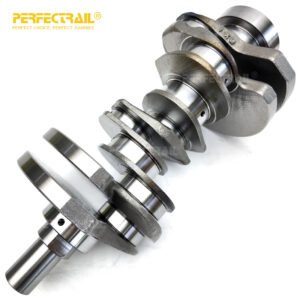
For images, use original product photography where possible. Show the lobe surfaces, journals, keyway or sprocket interface when relevant, packaging, identification marks, and inspection process. Use descriptive alt text that explains what is visible rather than repeating the same keyword on every image. For example, “Land Rover replacement camshaft lobe and journal close-up” is more useful than “camshaft camshaft camshaft.” The image filename, caption, and surrounding copy should also help the user understand why the image matters.
For external references, link to trustworthy educational or technical sources when explaining general engine operation. For internal links, connect this guide to PERFECTRAIL’s Land Rover specialist page, product categories, contact page, and related engine components. The purpose of each link should be clear: education, fitment, product discovery, or enquiry. Avoid adding links simply to increase link count.
Operations takeaway: A camshaft content hub performs best when marketing, purchasing, quality control, and sales use the same application data. One verified fitment record should support the product page, quotation, packing label, inspection document, and after-sales case.
9. Frequently Asked Questions for Wholesalers
What does a camshaft do in an engine?
A camshaft controls the opening and closing of the intake and exhaust valves. Its lobes transform rotation into valve movement, while its timing relationship with the crankshaft determines when the engine breathes during the four-stroke cycle.
What are common symptoms of a worn camshaft?
Possible symptoms include misfire, rough idle, reduced power, ticking or tapping, hard starting, stalling, timing-related fault codes, and metal debris in the oil. These symptoms overlap with other faults, so technicians should inspect timing, oil pressure, sensors, followers, and compression before replacing the camshaft.
How do I verify a Land Rover camshaft before ordering?
Send the supplier the VIN, engine code, model year, fuel type, OE number, camshaft position, and photographs or measurements where available. Ask the supplier to confirm direct replacement status in writing before the order is finalized.
Should cam followers or tappets be replaced with a camshaft?
The correct answer depends on their condition and the applicable engine service procedure. If a follower or tappet has worn against the old camshaft, reusing it may damage the new component. A qualified technician should inspect the complete contact pair and follow the engine manufacturer’s repair instructions.
Can a camshaft sensor fault prove that the camshaft is bad?
No. A camshaft-related diagnostic code may be caused by the sensor, wiring, timing chain or belt, reluctor, oil-control system, ECU correlation, or mechanical wear. Diagnosis should confirm the cause before a camshaft is ordered.
Does PERFECTRAIL supply Land Rover camshafts for wholesale buyers?
PERFECTRAIL presents itself publicly as a Land Rover parts specialist supplying OEM and aftermarket replacement parts for Defender, Range Rover, Discovery, and Freelander customers. Camshaft availability, application, MOQ, price, and lead time should be confirmed by VIN, engine code, and OE number for each enquiry.
What information should a wholesale quotation include?
A useful quotation should identify the confirmed part reference, application, quantity, unit price, price tier, packaging, stock or production status, lead time, shipping terms, warranty, inspection options, and validity period. This allows the buyer to compare total cost rather than unit price alone.
Does PERFECTRAIL offer support beyond the part itself?
The public website describes product consultation, OEM/ODM support, low-MOQ service, stock, global delivery, branding support, and a warranty program. The precise support available for a camshaft project should be confirmed with the sales and technical teams.
10. Conclusion: Partnering for Long-Term Business Competitiveness
A camshaft is a precision timing component, a wear-sensitive valve-train surface, and a commercially important engine-repair SKU. The most reliable buying decision combines exact fitment confirmation, profile and material understanding, inspection evidence, correct installation scope, sensible inventory planning, and a transparent warranty path.
For independent Land Rover workshops and distributors, the practical next step is to prepare a structured enquiry. Include the VIN, engine code, OE number, required quantity, target market, packaging preference, and whether related valve-train parts are needed. This gives a specialist supplier enough information to confirm the application and build a quotation that is useful for both technical and commercial decision-making.
PERFECTRAIL’s public positioning as a Land Rover parts specialist, together with its OEM and aftermarket range, product consultation, low-MOQ support, global supply capabilities, OEM/ODM services, quality-control information, and warranty program, provides a relevant starting point for B2B buyers exploring camshaft sourcing. Each specific part should still be verified before purchase, because engine configuration and OE references determine compatibility.
Need a Land Rover Camshaft Quote?
Send your VIN, engine code, OE reference, required quantity, and destination market. PERFECTRAIL can help you verify the application and discuss wholesale supply options for Land Rover engine parts.
Land Rover parts specialist | OEM and aftermarket solutions | B2B support