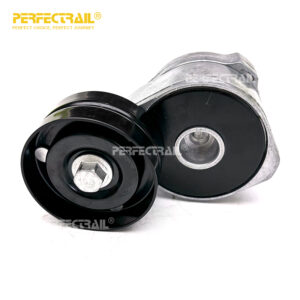
The Ultimate B2B Guide to Land Rover Belt Tensioners: Reliability, Fitment, Diagnosis, and Wholesale Sourcing
The lede: A Belt Tensioner is a small component with a large responsibility: it keeps a belt under controlled tension while the engine changes speed, load, and temperature. If the tension is too low, the belt can slip, squeal, track incorrectly, and overheat. If the tension is too high or fluctuates excessively, the belt, pulley bearings, alternator, water pump, air-conditioning compressor, or other driven parts may suffer unnecessary load.
This guide explains how accessory-drive and timing-belt tensioners work, how to identify common wear patterns, how technicians diagnose noise, misalignment, oscillation, bearing roughness, and spring or damper failure, and how B2B buyers can source the correct Land Rover replacement. PERFECTRAIL is described only through its public website information: Land Rover specialization, OEM and aftermarket replacement parts, product consultation, inventory, low MOQ, global delivery, OEM/ODM assistance, supplier evaluation, product inspection, and after-sales support. Exact tensioner availability and application must always be confirmed by VIN, engine code, belt system, OE reference, and market specification.
1. Global B2B Market Opportunity for Land Rover Belt Tensioners
The Land Rover aftermarket includes older utility vehicles, premium SUVs, diesel applications, petrol applications, multiple engine generations, and vehicles maintained by dealers, independent workshops, fleet operators, importers, and specialist distributors. Across these applications, belt-drive parts remain service-sensitive. A tensioner may be hidden behind a cover or accessory belt, yet its condition influences whether the belt transfers power quietly and reliably.
For B2B buyers, the value of a Belt Tensioner is not limited to its unit price. A correctly matched tensioner can help a workshop complete a belt service, protect the customer’s alternator or water pump, reduce repeat labor, and support a reliable repair. An incorrect tensioner can create belt misalignment, noise, premature wear, installation difficulty, or a repeat failure that damages the supplier relationship.
Demand often appears together with related products: accessory belts, timing belt kits, idler pulleys, water pumps, alternators, air-conditioning components, belt guides, seals, brackets, and fasteners. When a belt or tensioner fails, the complete system should be inspected because another worn component may have caused or accelerated the problem. A supplier that supports a complete system decision can improve order accuracy and increase useful basket value without selling unnecessary parts.
Why tensioner sourcing is a technical purchase
A tensioner must apply the right force through a working range while allowing the belt to track on the pulley. The assembly may include a spring, damper, pivot, bushing, housing, arm, pulley, bearing, mounting face, and stop. Each element contributes to the system’s behavior. A pulley with the correct diameter but the wrong groove profile may damage the belt. A spring with the wrong rate may cause slip or excess load. A mounting bracket that appears similar may change pulley alignment.
A strong SEO page should serve different search intents. A workshop may search “bad belt tensioner symptoms,” “tensioner pulley noise,” or “how to test a belt tensioner.” An importer may search “Land Rover belt tensioner supplier,” “timing belt tensioner wholesale,” “automatic belt tensioner replacement,” or “OE cross reference.” The page should move logically from definition to diagnosis, fitment, quality, and quotation.
PERFECTRAIL’s relevant B2B positioning
PERFECTRAIL’s public website presents the company as a Land Rover parts specialist supplying OEM and aftermarket components for Defender, Range Rover, Discovery, and Freelander applications. Public information highlights product consultation, stock, low MOQ, global delivery, OEM/ODM support, supplier evaluation, product inspection, and after-sales service. These capabilities are relevant to tensioner buyers because the category requires exact fitment, technical communication, coordinated belt-system purchasing, and careful packaging.
B2B takeaway: Sell a Land Rover Belt Tensioner as a calibrated belt-control assembly, not just a pulley. The strongest offer combines verified application data, controlled spring and damper behavior, bearing and alignment evidence, sensible MOQ support, and transparent warranty terms.
2. How a Belt Tensioner Works
A belt tensioner applies a controlled force to a belt so that the belt stays engaged with the pulley system. In an accessory drive, the belt transfers crankshaft rotation to components such as the alternator, water pump, power-steering pump, or air-conditioning compressor, depending on the vehicle. In a timing-belt system, the tensioner helps maintain correct synchronization between the crankshaft and camshaft. The two systems use different service logic, even though both contain a tensioning function.
An automatic tensioner usually combines a spring or other force-generating element with a damping mechanism. The spring provides the basic force, while the damper controls rapid movement caused by belt vibration, torsional variation, accessory load changes, or engine speed changes. The pulley and bearing provide a smooth contact surface for the belt. The mounting face and pivot keep the arm aligned with the belt path.
The accessory-drive power path
- Crankshaft drive: Engine rotation drives the main accessory or serpentine belt.
- Belt routing: The belt passes around fixed and driven pulleys according to the engine layout.
- Tension application: The tensioner arm and pulley apply force to keep the belt seated and engaged.
- Dynamic control: The damper limits unwanted arm movement and helps the belt remain stable.
- Accessory operation: Alternators, pumps, and compressors receive rotational power through the belt.
Why the belt needs controlled tension
If tension is too low, the belt can slip. Slip generates heat, noise, glazing, premature wear, and reduced accessory speed. In some applications the alternator may not produce the expected output or the water pump may not circulate coolant as intended. If tension is too high, the belt and accessory bearings may experience excessive radial load. Both conditions can reduce component life.
The belt also changes as it ages. Rubber compounds harden, grooves wear, contamination affects friction, and the belt may stretch or lose its original geometry. A functioning automatic tensioner compensates within its designed range, but it cannot correct a belt that is the wrong length, badly contaminated, incorrectly routed, or severely damaged.
Timing-belt tension control
A timing-belt tensioner has a higher-consequence role. The belt synchronizes the crankshaft and camshaft, so loss of tension can allow tooth jump, unstable timing, or belt damage. The correct tensioning procedure may use a fixed indicator, eccentric adjustment, hydraulic unit, or manufacturer-specific tool. A timing tensioner must never be selected or adjusted by appearance alone.
Technical caution: Never confuse an accessory-drive tensioner with a timing-belt tensioner in a quotation or catalogue. Confirm the belt system, engine position, service procedure, and OE reference before recommending the part.
3. Belt Tensioner Types and System Architecture
Belt tensioners can be classified by the belt system they control, the way force is applied, and the level of adjustment available. The buyer’s first decision is whether the part belongs to the accessory drive or the timing drive. The second is whether it is an automatic tensioner, a manually adjusted tensioner, a hydraulic tensioner, or a tensioner integrated into a service kit. These descriptions should be kept separate in product data.
Automatic accessory-belt tensioners
An automatic accessory-belt tensioner uses a spring-loaded arm and pulley to maintain tension as the belt and engine conditions change. The damper controls arm movement, while the pulley bearing allows the belt to run smoothly. This design reduces the need for manual tension adjustment, but it does not eliminate wear. Spring fatigue, bushing wear, bearing noise, pulley damage, and damper failure can all require replacement.
Automatic tensioners are often sold as complete assemblies because the components wear together. Replacing only a visibly noisy pulley may leave a weakened spring, worn pivot, or failing damper in service. The correct scope depends on the design and service recommendation, but B2B product content should make clear whether the part is a complete assembly or a pulley-only component.
Manual or adjustable tensioners
A manual tensioner uses an adjustment mechanism to set belt tension during installation. The technician may move a pulley or bracket and then tighten the mounting hardware. Correct tension depends on the belt specification, measurement method, temperature, and adjustment procedure. Too little or too much adjustment can produce the same wear problems seen in automatic systems.
A manual tensioner should be supplied with clear setting guidance when the application requires it. The quotation should identify whether the product includes an indicator, eccentric plate, adjustment bolt, locking hardware, or required measurement reference. Do not replace a manual tensioner with an automatic type unless the engine design supports that change.
Timing-belt tensioners
Timing-belt tensioners control the belt that synchronizes engine rotation. They may be eccentric, spring-loaded, hydraulic, or integrated into a kit with an idler, water pump, and belt. Because timing errors can create severe engine damage in some designs, installation must follow the vehicle-specific service procedure and use the correct locking and tensioning tools.
Timing tensioner listings should include the engine code, belt system, service interval or kit relationship where confirmed, and whether the part is intended for a complete kit. Avoid combining accessory-belt and timing-belt keywords on one product page simply to expand traffic. That approach can attract the wrong buyers and weaken topical relevance.
Hydraulic tensioners and dampers
Some tensioners use hydraulic force or damping to control belt movement. They can provide stable behavior across changing loads, but they also introduce seals, fluid behavior, and application-specific installation requirements. The buyer should confirm orientation, storage position, lock pins, bleeding or priming requirements, and whether the hydraulic unit is supplied as part of a wider kit.
Pulley profile and bearing design
The pulley may have a smooth face or grooves that match the belt. Its diameter, width, offset, material, flange, bearing, and surface finish affect belt tracking and noise. A bearing should rotate smoothly without roughness, play, or abnormal noise. Plastic, nylon, steel, and other pulley materials may be suitable in different applications, but material alone does not prove quality. The entire assembly must match the belt and engine environment.
| Tensioner category | Main purpose | B2B verification point |
|---|---|---|
| Automatic accessory tensioner | Maintains accessory-belt force dynamically | Spring, damper, pivot, pulley bearing, belt path, mounting |
| Manual tensioner | Allows technician to set belt tension | Adjustment range, indicator, hardware, setting procedure |
| Timing-belt tensioner | Maintains crankshaft-camshaft synchronization | Engine code, timing system, kit contents, installation tools |
| Hydraulic tensioner | Controls force or damping through hydraulic behavior | Orientation, storage, lock pin, priming, seal condition |
4. Land Rover Fitment and Application Verification
The phrase “Land Rover Belt Tensioner” may describe an accessory-drive tensioner, timing-belt tensioner, idler, pulley assembly, or complete belt kit. Defender, Range Rover, Discovery, and Freelander vehicles include different engines, belt routes, accessory layouts, and model-year changes. A model name or photograph is an initial clue only. A professional supplier should confirm the exact belt system before quoting a part as suitable.
The minimum fitment record
Request the VIN, engine code, model year, fuel type, belt system, OE reference, belt part number, position of the tensioner, pulley profile, mounting arrangement, and photographs of the original component. If the engine, alternator, compressor, water pump, or belt drive has been modified or replaced, record that information. Vehicle registration data may not describe the installed engine or accessory package accurately.
Cross-reference numbers can identify possible equivalents, but they should be checked against the vehicle and physical design. Numbers may be superseded, market-specific, or associated with a complete kit rather than an individual tensioner. The quotation should identify whether the part is a complete tensioner assembly, pulley-only component, timing kit, or accessory-belt kit.
Fitment details that frequently cause returns
- Accessory belt or timing belt classification and exact belt route.
- Engine code, displacement, fuel type, emissions specification, and model-year change.
- Pulley diameter, width, smooth or grooved surface, offset, and belt contact profile.
- Mounting holes, bracket shape, pivot position, arm travel, and clearance.
- Automatic, manual, hydraulic, eccentric, or kit-integrated design.
- Included bolts, washers, locking pins, idlers, belt, water pump, or other service parts.
SEO internal-link strategy
A strong Belt Tensioner page should link to PERFECTRAIL’s Land Rover parts specialist overview, the Defender parts category, the Range Rover parts category, the Discovery parts category, and the contact page. Place these links where a reader is ready to move from technical education to fitment confirmation or quotation.
Use precise product language such as “for selected Land Rover accessory-drive applications; confirm by VIN and OE reference.” Avoid a universal-fit claim unless the supplier has documented that the part applies across every vehicle listed.
5. Belt Tensioner Failure Symptoms and Diagnosis
Tensioner faults often appear as belt noise, visible tracking problems, accessory failure, or abnormal arm movement. However, a belt can squeal because it is the wrong length, contaminated, worn, or misrouted. A pulley can be noisy because its bearing has failed, while a spring or damper problem can cause the belt to slip even if the pulley appears smooth. The correct diagnosis checks the complete belt-drive system.
Common symptoms of a failing tensioner
- Squealing or chirping: Low tension, belt slip, misalignment, contamination, or pulley wear can create high-pitched noise.
- Rattling or grinding: Bearing, pivot, bushing, damper, or arm contact problems may produce mechanical noise.
- Abnormal belt tracking: A bent bracket, worn bushing, incorrect mounting, or pulley offset can move the belt sideways.
- Arm oscillation or bounce: Excessive movement can indicate damper or spring failure, torsional vibration, or a related pulley fault.
- Rust, cracks, or damaged stops: Corrosion and structural damage can weaken the housing, bracket, or arm.
- Rough or binding movement: A worn pivot, bearing surface, or contaminated mechanism may prevent smooth travel.
- Loss of spring force: A tensioner arm that moves without expected resistance may no longer apply correct belt force.
- Premature belt or accessory wear: Repeated belt damage, alternator problems, water-pump issues, or compressor bearing failure may have a tensioner cause.
A professional diagnostic sequence
- Record the complaint. Note whether the noise occurs at cold start, acceleration, steering load, air-conditioning engagement, idle, or high engine speed.
- Identify the belt system. Confirm whether the sound or wear belongs to the accessory drive or timing drive.
- Inspect belt routing and condition. Check length, ribs or teeth, cracks, glazing, fraying, contamination, missing material, and correct routing.
- Inspect the pulley. With the engine off and belt removed where safe, rotate the pulley and check for roughness, noise, play, resistance, cracks, chips, dents, or embedded debris.
- Check alignment. Look for abnormal belt tracking, shiny streaks, side wear, bracket distortion, corrosion between mounting surfaces, and pulley offset.
- Cycle the arm correctly. Use the applicable tool and safe procedure to move the tensioner through its working range. It should move smoothly and show designed resistance.
- Observe movement during operation. Excessive bounce or continuous oscillation can indicate damper, spring, torsional vibration, or overrunning pulley problems.
- Inspect driven accessories. Confirm that alternator, water pump, air-conditioning compressor, and other pulleys turn correctly and are not causing abnormal load.
- Confirm the repair. Replace the correct parts, route and tension the belt, then recheck noise, tracking, tensioner movement, charging, cooling, and accessory operation.
Workshop warning: Keep hands, clothing, tools, and loose items away from a running belt drive. Timing-belt inspection and tensioning must follow the engine-specific service procedure because an incorrect setting can cause synchronization failure.
The diagnostic approach above supports high-quality SEO because it answers symptom searches without claiming that one visible symptom proves a specific failed part. For B2B sales teams, it also becomes a useful enquiry form: request the noise description, belt photo, pulley position, fault history, VIN, engine code, and OE reference before recommending a tensioner.
6. How B2B Buyers Should Select a Replacement Tensioner
The best replacement decision starts with exact application data and then evaluates design, condition, testing, commercial terms, and installation support. A low-priced tensioner that causes a repeat belt failure is not a low-cost purchase. The total cost may include extra labor, freight, lost workshop capacity, customer compensation, and damage to a related accessory. A qualified supplier should therefore help the buyer compare technical risk and total ownership cost, not only unit price.
Step one: identify the exact part
Send the VIN, engine code, model year, fuel type, belt system, OE reference, belt reference, tensioner position, and photographs of the original part. State whether the request is for a complete accessory tensioner, pulley, timing tensioner, timing kit, or belt-and-tensioner service package. If the vehicle has a replacement engine, modified accessory, remap, or previous belt-drive repair, disclose that information.
Step two: decide the correct replacement scope
A workshop may need one complete tensioner, a timing kit, an accessory belt kit, or a full belt-drive inspection. If the bearing is noisy but the spring and damper are also aged, replacing only the pulley may leave a failure-prone assembly in service. If the belt is contaminated or the water pump is rough, a tensioner alone may not resolve the root cause. The supplier should explain the inspection logic without forcing unnecessary parts.
Step three: confirm included components
Clarify whether the quotation includes the pulley, arm, spring, damper, bracket, mounting bolt, washer, locking pin, belt, idler, water pump, or other kit parts. For a hydraulic or timing application, confirm whether the tensioner is supplied locked, preloaded, primed, or ready for a specified installation procedure. Missing hardware or unclear kit scope is a common cause of workshop delay.
Step four: compare technical and commercial evidence
Request product status, spring and damper information where applicable, bearing or pulley inspection, dimensional check, assembly inspection, packaging, batch traceability, warranty, MOQ, price tiers, stock, production lead time, and shipping terms. PERFECTRAIL publicly describes supplier evaluation and product inspection as part of its Land Rover parts business. The documents available for a particular Belt Tensioner order should be confirmed rather than assumed.
B2B pre-order checklist
- Are VIN, engine code, model year, belt system, and OE reference confirmed?
- Is the part an accessory tensioner, timing tensioner, idler pulley, or complete kit?
- Are pulley profile, offset, mounting, arm travel, and clearance matched?
- Are belt, bolts, washers, locking pins, idlers, or water pump included?
- What are MOQ, stock status, price tiers, lead time, packaging, and Incoterms?
- What evidence and installation conditions apply to the warranty?
7. Quality Assurance, and Testing
A credible Belt Tensioner product page should explain what the assembly does, how it is inspected, and which claims depend on the target application. E-E-A-T matters because a tensioner can affect belt stability and the reliability of other engine components. The page should distinguish verified supplier capabilities from application-specific claims, describe inspection methods in plain language, and tell the buyer what information is needed before a part can be recommended.
Quality control begins with controlled components and assembly. The arm, housing, spring, damper, pivot, bushing, pulley, bearing, mounting face, bolts, and protective coating must conform to the intended design. Critical dimensions include pulley diameter, width, offset, groove or smooth profile, bearing fit, mounting holes, pivot location, arm travel, and belt contact plane. Small errors can change belt tracking or load even when the part looks similar to the original.
Pulley and bearing inspection
The pulley should be checked for surface damage, chips, cracks, dents, embedded debris, correct groove form, and consistent rotation. The bearing should rotate smoothly without roughness, excessive play, or abnormal noise. A bearing inspection at the factory does not replace correct installation; belt misalignment, contamination, excessive tension, or a damaged accessory can still shorten service life after installation.
Spring, damper, and arm behavior
The spring provides tension, while the damper moderates movement. Inspection should verify the designed resistance, range of motion, stop position, arm alignment, and return behavior. A tensioner that binds, chatters, oscillates excessively, or shows no expected resistance may have a functional problem. The exact acceptance criteria should be tied to the design and test procedure rather than a universal number.
Dimensional and assembly checks
A final inspection should compare the assembly to approved drawings or an authenticated reference. Check mounting faces, thread condition, pulley offset, belt plane, fastener fit, stop position, and protective caps. For timing applications, confirm the adjustment indicator, eccentric position, lock pin, and kit relationship where applicable. Keep inspection records linked to the part reference and production batch.
Corrosion, vibration, and durability
A tensioner experiences vibration, temperature changes, road salt, water, dirt, and fluctuating belt loads. The housing, bracket, pivot, bearing seals, spring, damper, and pulley must tolerate the target environment. Buyers serving coastal, dusty, off-road, high-mileage, or fleet markets should state those conditions. A product page should not claim “heavy duty” or “long life” without supporting design or test evidence.
Packaging and traceability
Packaging should prevent pulley impact, bent brackets, scratched mounting faces, corrosion, dust, and loss of small fasteners. Use internal supports, suitable moisture protection, and clear labels. Mark the part reference, quantity, batch information where available, and handling requirements. For B2B buyers, a clear packing list and separation by verified application reduce warehouse errors and make replenishment easier.
Warranty and technical support
Warranty terms should state coverage, installation conditions, evidence required, exclusions, and claim procedure. If a failure was caused by a wrong belt length, misrouting, contamination, a damaged accessory, excessive tension, or incorrect timing adjustment, replacing the tensioner alone may not solve the problem. PERFECTRAIL’s public pages describe quality-control, inspection, warranty, and after-sales capabilities; precise terms for a particular Belt Tensioner order should be confirmed in writing before payment.
8. Wholesale Inventory, Packaging, and Supply Chain
Belt Tensioners are application-specific assemblies with multiple designs across a vehicle range. A distributor should balance availability against warehouse space, capital, kit complexity, and model coverage. Use enquiry history, workshop demand, vehicle population, engine-family popularity, quotation records, and return reasons to divide references into core stock, planned stock, and special-order inventory. This prevents slow-moving tensioners from absorbing cash while preserving access to proven demand.
Core, planned, and special-order stock
- Core stock: confirmed references with repeated orders and reliable local demand.
- Planned stock: references purchased with related belts, idlers, water pumps, or accessory parts for scheduled demand.
- Special order: rare references released only after VIN, OE, belt-system, and customer commitment are confirmed.
PERFECTRAIL’s public information highlights a wide Land Rover parts range, inventory, low MOQ, fragmented-order support, and global delivery. For a tensioner distributor, this can support mixed-SKU purchasing: tensioners may be combined with accessory belts, timing components, water pumps, alternators, pulleys, engine parts, chassis parts, or body parts according to market demand. Actual stock, price, lead time, and freight must be quoted for the destination and quantity.
Reduce wrong-part returns with process control
Create mandatory order fields for VIN, engine code, OE number, belt system, pulley profile, mounting details, confirmed fitment, and included accessories. Attach the same application record to the quotation, purchase order, inspection report, packing list, and after-sales case. Do not allow a shortened product name or a copied photograph to become the only warehouse reference.
Build a verified belt-service bundle
A workshop may need a tensioner, belt, idler, water pump, bolts, seals, or timing cover components. A verified bundle can increase convenience and order value, but it must be application-specific. State which items are included, which are optional, and which require separate VIN confirmation. Avoid “universal kit” language when belt routing, pulley profile, or mounting position differs.
Shipping and export documentation
A professional shipping file should identify the part reference, quantity, packaging, origin information where required, invoice details, and agreed Incoterms. Protect pulley surfaces, brackets, mounting ears, threads, and small hardware from impact. Use separators for mixed references and label every carton so the customer can match the delivery to the purchase order quickly. Compare air, sea, and consolidated freight according to urgency, volume, and destination.
| B2B objective | Recommended action | Commercial result |
|---|---|---|
| Protect working capital | Use core, planned, and special-order stock tiers | Reduces dead stock while preserving availability |
| Reduce wrong-part returns | Require VIN, OE, belt system, pulley, and mounting confirmation | Lowers avoidable freight and customer disputes |
| Increase order value | Offer verified tensioner, belt, idler, and pump bundles | Improves convenience and cross-selling |
| Protect transit quality | Use rigid internal protection and clear carton labels | Reduces damage claims and receiving delays |
Visual SEO and content repurposing
Use original images where possible: a complete tensioner assembly, pulley and bearing close-up, spring and damper diagram, accessory belt route, timing-belt tensioner indicator, worn versus new pulley, misalignment example, packaging, and receiving inspection. Suggested alt text includes “Land Rover Belt Tensioner pulley and arm close-up,” “automatic accessory belt tensioner inspection diagram,” and “aftermarket timing belt tensioner packaging for wholesale shipment.” Avoid repeating the same keyword in every alt attribute.
The guide can support a downloadable VIN-request form, a belt-drive inspection card, a tensioner diagnosis checklist, a quotation template, and short installation or inspection videos. Link these assets back to the main guide and relevant Land Rover categories. This creates a content hub that moves a buyer from education to application confirmation and then to a qualified enquiry.
Receiving inspection and after-sales feedback
When a shipment arrives, the receiving team should compare the carton label, part reference, quantity, pulley profile, mounting points, arm, spring, damper, and protective packaging with the purchase order. Photographing the carton and component before installation can make a later freight or warranty investigation more efficient. Record whether the original belt drive was inspected for misalignment, contamination, and related accessory damage.
After installation, ask the workshop to record belt routing, tensioner movement, noise, tracking, charging, cooling, air-conditioning operation, timing checks where applicable, and the post-repair road test. This information helps a distributor distinguish wrong application, installation error, transit damage, belt contamination, accessory failure, and possible product concerns. Repeated questions can become FAQ content; frequently missing hardware can become a bundle; recurring fitment mistakes can be solved through a better enquiry form.
9. Frequently Asked Questions for Wholesalers
What does a belt tensioner do?
A belt tensioner maintains controlled tension on a belt so it can transfer engine power without excessive slip, vibration, or load on driven accessories. It may use a spring, damper, pivot, arm, pulley, bearing, hydraulic unit, or manual adjustment mechanism depending on the belt system.
What are common signs of a failing belt tensioner?
Common signs include squealing, rattling, pulley bearing noise, belt misalignment, arm oscillation, rough movement, rust, cracks, loss of spring force, and premature belt or accessory wear. A wrong belt, contamination, or accessory failure can create similar symptoms, so diagnosis is needed.
What is the difference between an accessory belt tensioner and a timing belt tensioner?
An accessory belt tensioner controls a belt that drives external accessories such as an alternator or air-conditioning compressor. A timing belt tensioner controls camshaft-to-crankshaft synchronization and has different fitment, installation, and service requirements.
How do I verify a Land Rover belt tensioner before ordering?
Provide the VIN, engine code, model year, belt system, OE reference, pulley profile, mounting arrangement, and photographs of the original part. Confirm whether the product is a complete tensioner, pulley, timing component, or kit before payment.
Should the belt be replaced with the tensioner?
If the belt or tensioner is worn, the complete belt-drive condition should be evaluated. Replacing related wear parts together may reduce repeat labor, but the correct scope depends on inspection and the engine manufacturer’s procedure.
Can a bad tensioner damage an alternator or water pump?
Yes. Incorrect or fluctuating belt tension can create excessive heat, vibration, slip, or bearing load that may shorten the life of belt-driven accessories. The accessory should also be inspected before a replacement tensioner is installed.
Does PERFECTRAIL supply Land Rover belt tensioners for wholesale buyers?
PERFECTRAIL publicly presents itself as a Land Rover OEM and aftermarket parts specialist. Exact belt tensioner availability, fitment, MOQ, price, and lead time should be confirmed by VIN and OE reference.
What should a wholesale belt tensioner quotation include?
A quotation should identify the confirmed application, belt system, part reference, pulley and tensioner design, included components, quantity, price tier, stock or lead time, packaging, inspection, shipping terms, warranty, and claim process.
10. Conclusion: Building a Reliable Belt Tensioner Supply Program
A Belt Tensioner is a calibrated control assembly at the center of a vehicle’s belt-drive system. Its pulley, bearing, arm, pivot, spring, damper, housing, and mounting face must work together with the correct belt and accessory layout. For Land Rover wholesalers, the most reliable purchase combines precise fitment verification, clear accessory-versus-timing classification, documented inspection, clean handling, protective packaging, practical inventory planning, and transparent after-sales terms.
Before requesting a quotation, prepare the VIN, engine code, OE reference, belt type, tensioner position, pulley details, required quantity, destination market, and any diagnostic findings. If the vehicle has experienced belt noise, a broken belt, accessory failure, timing work, corrosion, or a previous tensioner replacement, include that history. The additional information helps a specialist supplier recommend the correct repair scope instead of treating the tensioner as an isolated part.
PERFECTRAIL’s public positioning as a Land Rover parts specialist, together with its OEM and aftermarket range, product consultation, inventory, low-MOQ support, global delivery capabilities, OEM/ODM services, supplier evaluation, product inspection, and warranty information, provides a relevant starting point for B2B buyers exploring Belt Tensioner sourcing. Every specific tensioner must still be verified before purchase because engine configuration, belt routing, pulley geometry, and OE references determine compatibility.
After installation, the workshop should record belt routing, mounting torque, tensioner movement, tracking, noise, related accessory condition, charging, cooling, air-conditioning operation, and timing checks where applicable. Distributors can use this information to evaluate warranty claims and identify recurring causes of returns. If customers repeatedly ask the same fitment question, add the answer to the product page and FAQ. If a particular belt, bolt, idler, or water pump is frequently needed, offer it as a verified bundle. This feedback loop improves conversion quality, reduces avoidable returns, and strengthens long-term B2B customer retention.
Need a Land Rover Belt Tensioner Quote?
Send your VIN, engine code, OE reference, belt-system details, original-part photographs, required quantity, and destination market. PERFECTRAIL can help you confirm the application and discuss wholesale supply options for Land Rover belt-drive parts.
Land Rover parts specialist | OEM and aftermarket solutions | B2B support