The Ultimate B2B Guide to Land Rover Fuel Injectors: Atomization, Reliability, Fitment, and Wholesale Sourcing
The lede: A fuel injector is the metering point between an engine’s fuel system and its combustion process. It must deliver the right quantity of fuel, at the right time, with the right spray pattern, repeatability, sealing, and electrical or hydraulic response. For a Land Rover workshop, importer, or distributor, choosing a Fuel Injector is therefore not a simple visual replacement exercise. The part must match the exact engine, fuel system, pressure architecture, control strategy, and service requirement.
This guide explains how automotive fuel injectors work, how gasoline and diesel injector systems differ, why spray quality and response time matter, how technicians diagnose injector problems, and how B2B buyers can evaluate fitment, quality, testing, packaging, and supply support. PERFECTRAIL is described only through capabilities published on its public website: Land Rover specialization, OEM and aftermarket replacement parts, product consultation, low-MOQ support, inventory, global delivery, OEM/ODM assistance, supplier evaluation, product inspection, and after-sales service. Exact injector availability and application must always be confirmed by VIN, engine code, OE reference, fuel type, and market specification.
1. Global B2B Market Opportunity for Land Rover Fuel Injectors
The Land Rover aftermarket serves a broad vehicle population: newer luxury SUVs with electronically managed fuel systems, older vehicles maintained by independent workshops, and specialist or utility applications that continue to operate long after the original dealer warranty. This diversity creates steady demand for fuel-system components. Fuel Injectors are especially important because a vehicle can remain visually complete while one injector quietly causes poor combustion, hard starting, smoke, misfire, or excess fuel consumption.
For B2B buyers, the commercial value of an injector is linked to more than its unit price. A correct injector can restore a workshop repair, protect engine components, reduce diagnostic time, and help a distributor maintain customer confidence. An incorrect injector can create a return, delay a vehicle, contaminate the engine oil, damage a catalytic or emissions component, or produce a complaint that is difficult to resolve because several parts were changed at once.
A professional supplier should therefore be able to discuss the complete fuel-system context: tank and pump condition, fuel pressure, filter quality, rail or manifold arrangement, injector coding or calibration where applicable, wiring, seals, return flow, and the engine control system. A Fuel Injector should not be treated as an isolated product if the original failure may have been caused by contaminated fuel, water, a pressure fault, or electrical damage.
Why injector sourcing creates high technical risk
The injector controls a precisely timed event. Small differences in flow, opening response, spray angle, nozzle-hole geometry, coil or piezo behavior, and sealing can affect the combustion process. A part that physically fits into the rail or cylinder head may still be unsuitable if its flow characteristics or control code do not match the engine. For importers and distributors, this makes application data and supplier verification essential.
Search intent is also highly varied. A workshop may search “bad fuel injector symptoms,” while an importer may search “Land Rover Fuel Injector supplier,” “diesel common rail injector wholesale,” or “petrol injector OE cross reference.” A strong SEO page should serve these intents in one logical journey: explain the part, distinguish system types, support diagnosis, define the purchasing checklist, and provide a clear route to request a quotation.
PERFECTRAIL’s relevant B2B positioning
PERFECTRAIL’s public website presents the company as a Land Rover parts specialist with OEM and aftermarket products across Defender, Range Rover, Discovery, and Freelander applications. Its public business information highlights product consultation, inventory, low MOQ, global delivery, OEM/ODM assistance, supplier evaluation, product inspection, and after-sales support. These capabilities are relevant to injector buyers because the category requires fitment confirmation, quality questions, mixed-SKU replenishment, and dependable communication.
B2B takeaway: Sell Fuel Injectors as precision fuel-system components, not generic metal parts. The strongest offer combines verified application data, transparent testing information, suitable packaging, practical MOQ support, and a clear warranty process.
2. How a Fuel Injector Works
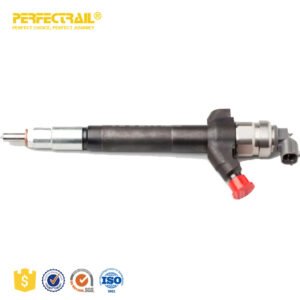
A fuel injector receives fuel from the engine’s delivery system and releases it through a controlled nozzle. The control unit, hydraulic pressure, mechanical spring, solenoid, or piezo actuator determines when the valve opens and how long it remains open. During that short event, the nozzle turns a measured quantity of liquid fuel into a spray that must mix with air in the intended part of the combustion process.
The basic goal is precise metering and effective atomization. A fine, well-directed spray can support consistent combustion, while an incorrect spray pattern can create wall wetting, incomplete combustion, smoke, deposits, poor throttle response, or higher emissions. The ideal result depends on the injector design and the engine’s chamber, piston crown, intake flow, pressure, timing, and control calibration.
The injector body and internal valve
The body contains fuel passages, valve components, the nozzle, seals, and the electrical or mechanical interface. Petrol injectors commonly use a solenoid valve, while modern diesel systems may use solenoid or piezo technology within a high-pressure common-rail architecture. The internal valve must open and close quickly and repeatedly without sticking, leaking, or losing its calibrated response.
The nozzle is not simply a hole. Its number, diameter, angle, length, and flow characteristics are designed around pressure, fuel type, chamber geometry, and engine calibration. A nozzle that appears similar may deliver fuel in the wrong direction or at an unsuitable rate. This is one reason a catalogue photograph cannot replace OE-number and engine verification.
Electronic control and injector response
In an electronically controlled system, the engine control unit uses inputs such as engine speed, load, temperature, pressure, and oxygen or emissions feedback to calculate fuel delivery. It then commands the injector for a defined duration or sequence. The actual quantity delivered depends on the injector response, fuel pressure, electrical signal, temperature, and calibration data.
Modern systems may use multiple injection events. A diesel common-rail injector can support pilot, main, and post-injection strategies, while a gasoline direct-injection system may use pressure and timing strategies that differ from port injection. B2B listings should describe the system accurately and avoid applying a diesel or direct-injection claim to a petrol port injector.
Technical caution: An injector’s electrical connector, body shape, and mounting dimensions do not prove that its flow rate, spray pattern, response, or calibration is correct. Confirm the complete application before ordering.
3. Fuel Injector Types and System Architecture
Fuel Injectors are classified in several ways: by fuel type, by location in the engine, by pressure architecture, and by actuation technology. For a B2B buyer, the most useful classification is the one that determines compatibility and service procedure. A petrol port injector, a gasoline direct injector, and a diesel common-rail injector are not interchangeable categories even when all are described as fuel injectors.
Petrol port fuel injectors
A port fuel injector sprays fuel into the intake port near the intake valve. The air and fuel mixture then enters the cylinder. These injectors are controlled electronically and are often associated with a lower-pressure fuel rail than direct-injection systems, although exact pressure and flow depend on the engine. Seal condition, connector type, resistance, flow rate, and spray pattern all matter when selecting a replacement.
A port injector can develop deposits that change the spray pattern or restrict flow. A leaking injector can create a rich mixture, fuel smell, hard starting, poor economy, or oil dilution. Diagnosis should compare cylinder contribution, fuel pressure, electrical operation, and injector balance rather than replacing every injector solely because one cylinder misfires.
Gasoline direct injectors
A gasoline direct injector sprays fuel directly into the combustion chamber. It operates within a higher-pressure and more thermally demanding environment than a port injector. The injector tip, combustion-chamber position, seal arrangement, pressure control, and control strategy must match the engine. Installation cleanliness is particularly important because dirt or incorrect sealing can cause leakage and combustion problems.
Direct-injection systems may use special calibration or coding procedures after an injector is replaced. The workshop should follow the engine-specific service information and verify that the ECU recognizes the replacement component. A supplier should state whether coding, calibration data, or additional installation parts are required for the target application.
Diesel common-rail injectors
A common-rail diesel system stores fuel at high pressure in a rail and uses electronically controlled injectors to deliver fuel into each cylinder. This architecture supports precise timing and multiple injection events. The injector must work with the rail pressure, high-pressure pump, ECU calibration, return circuit, nozzle design, and cylinder-specific requirements.
Common-rail service requires strict cleanliness. A small particle can damage a precision valve or nozzle. Incorrect return flow, poor sealing, or an injector that exceeds its intended leak-off rate can cause hard starting, rail-pressure faults, uneven running, or engine damage. The buyer should therefore ask whether the injector is new, remanufactured, or repaired, and what test documentation accompanies it.
Solenoid and piezo actuation
Solenoid injectors use electromagnetic force to move a valve. Piezo injectors use a piezoelectric actuator that changes dimension when energized. Both technologies can deliver fast, controlled injection, but their electrical behavior, driver requirements, calibration, and test procedures differ. A B2B catalogue should identify the technology when it is relevant to fitment and should not imply that a connector adapter makes two technologies equivalent.
| Injector category | Fuel-system position | Main B2B verification points |
|---|---|---|
| Petrol port injector | Intake port near intake valve | Flow, connector, seal, resistance, spray pattern |
| Gasoline direct injector | Combustion chamber | Pressure, tip design, seal, coding, heat exposure |
| Diesel common-rail injector | High-pressure rail to cylinder | Rail system, leak-off, coding, nozzle, test report |
| Solenoid or piezo | Electronic actuation technology | Driver compatibility, response, electrical specification |
4. Land Rover Fitment and Application Verification
The phrase “Land Rover Fuel Injector” covers many possible applications. Defender, Range Rover, Discovery, and Freelander model families include different engines, generations, fuel types, emissions configurations, and injection architectures. A model name or photograph is therefore only an initial clue. A responsible supplier must confirm the exact engine and injector reference before quoting a part as suitable.
The fitment information a supplier should request
Ask for the VIN, engine code, model year, fuel type, engine displacement, OE or manufacturer reference, injector position, and a photograph of the original connector and body. If the engine has been replaced, modified, remapped, or rebuilt, record that information. The current vehicle registration may not describe the installed engine accurately.
Cross-reference numbers can help identify an equivalent part, but they must be checked against the actual application. Numbers may be superseded, market-specific, or associated with a repaired and a new version. The quotation should identify whether the component is a new aftermarket injector, a genuine part, a remanufactured injector, or a test-approved repair unit.
Coding, calibration, and cylinder position
Some modern diesel and gasoline systems use cylinder-specific calibration or injector coding. A replacement injector may need to be entered into the ECU, and the code may be printed on the injector body or included in the test documentation. The exact procedure is engine-specific. A supplier should not promise that every injector is plug-and-play unless the application has been verified.
Cylinder position can also matter. Some injectors are supplied as a common part for all cylinders, while others may be selected or calibrated as a set. If a customer is replacing one injector, ask whether the engine manufacturer or repair procedure recommends matching, coding, or checking the remaining injectors. This protects the workshop from an uneven repair result.
SEO internal-link strategy
A Fuel Injector article should link to PERFECTRAIL’s Land Rover specialist overview, the Defender parts category, the Range Rover parts category, the Discovery parts category, and the contact page. These links should be placed where they help users move from technical education to product discovery, fitment confirmation, or quotation.
Use careful language in product content: “for selected Land Rover applications; confirm by VIN and OE number.” This is stronger than an unsupported universal-fit claim because it reflects the real decision process and reduces the risk of wrong-part orders.
5. Fuel Injector Failure Symptoms and Diagnosis
Fuel Injector faults can look like ignition, fuel-pump, air-metering, compression, sensor, or ECU problems. The correct diagnosis starts with the complaint and operating conditions rather than a part-swapping assumption. A rough idle may come from one clogged injector, but it may also come from a vacuum leak or low compression. A hard start may be caused by injector leak-off, low rail pressure, weak battery voltage, or a timing issue. The injector must be tested in the context of the complete system.
Common symptoms of injector problems
- Rough idle or misfire: Uneven fuel delivery can make one cylinder contribute less than the others.
- Hard starting: Low pressure, excessive injector return, leakage, or poor atomization can delay combustion.
- Loss of power: A restricted nozzle or incorrect quantity can reduce torque under load.
- Increased fuel consumption: A leaking or over-delivering injector can create an excessively rich mixture.
- Smoke or strong fuel smell: Poor combustion, leakage, or incorrect spray may leave unburned fuel.
- Engine oil dilution: Fuel entering the cylinder or crankcase can reduce lubricant quality and increase wear.
- Diagnostic codes: Electrical, circuit, contribution, rail-pressure, or combustion codes may point toward an injector but do not prove the component is defective.
- Knock or combustion noise: An incorrect injection event can change the combustion rate, especially in a diesel engine.
A professional diagnostic sequence
- Record the complaint. Note whether the symptom occurs at cold start, hot idle, acceleration, high load, or after refueling.
- Scan the control system. Record codes and live data, but treat them as evidence for a test plan rather than an automatic parts order.
- Check fuel quality and filtration. Water, rust, dirt, incorrect fuel, and a damaged filter can cause multiple injector failures.
- Verify delivery pressure. Test the low-pressure pump, high-pressure pump, rail pressure, regulator, and pressure retention where applicable.
- Check electrical operation. Inspect power, ground, wiring, connector condition, resistance, and the control signal using the correct test procedure.
- Compare cylinder contribution. Use approved balance, cut-out, or cylinder-contribution tests to identify an uneven cylinder.
- Test leak-off or return flow. Excessive return can reduce available rail pressure and create hard starting or poor running.
- Bench-test the injector. Check flow, spray pattern, opening response, leakage, and coding data against the applicable specification.
- Find the root cause. If contamination or a pump failure damaged one injector, inspect the rest of the system before installing a replacement.
Workshop warning: Never open high-pressure diesel fuel lines while the engine is operating. Common-rail fuel can cause serious injury. Follow the manufacturer’s pressure-release and safety procedures.
This diagnostic structure is useful for SEO because it answers symptom searches without making an unsafe remote diagnosis. It also supports B2B conversion: a buyer who understands the required tests is more likely to send the VIN, OE number, test report, and quantity needed for an accurate quotation.
6. How B2B Buyers Should Select a Replacement Injector
The best replacement decision begins with exact application data, then evaluates technology, condition, test evidence, commercial terms, and installation support. A low-priced injector that creates an incorrect spray or a return is not a low-cost purchase. The total cost includes technician time, freight, diagnostic delay, customer compensation, and the risk of damage to pistons, valves, emissions components, or engine oil.
Step one: identify the exact part
Provide the VIN, engine code, model year, fuel type, injector position, OE reference, connector details, and any available fault or bench-test information. State whether the request is for a new aftermarket injector, genuine replacement, remanufactured unit, matched set, or repair kit. If the engine has been modified or replaced, disclose that information before the quotation is prepared.
Step two: decide whether one injector or a set is appropriate
The answer depends on the engine, the test results, and the manufacturer’s repair procedure. If one injector has an electrical fault and the other injectors pass the flow and return tests, replacement of one may be appropriate. If the system suffered contamination or the injectors show uneven wear, a set or broader fuel-system inspection may be more sensible. A supplier should not force a set sale without technical reason, but should explain the risk of mixing components with different condition or calibration.
Step three: check included components
Clarify whether the quotation includes copper washers, O-rings, seals, protective caps, calibration code, test report, return-flow accessories, or installation hardware. The included parts differ between applications. A missing seal or damaged protective cap can create a leak or contamination problem after delivery.
Step four: compare technical and commercial evidence
Request product status, test method, flow and leak criteria where approved, calibration information, packaging, batch traceability, warranty, MOQ, price tiers, stock, production lead time, and shipping terms. PERFECTRAIL publicly describes supplier evaluation and product inspection as part of its Land Rover parts business. The documents available for a specific Fuel Injector order should be confirmed rather than assumed.
B2B pre-order checklist
- Are VIN, engine code, fuel type, OE number, and injector position confirmed?
- Is the injector petrol port, gasoline direct, diesel common-rail, solenoid, or piezo?
- Does the part require coding, calibration, or cylinder-specific programming?
- Are seals, washers, protective caps, and test documents included?
- What are MOQ, stock status, price breaks, lead time, and Incoterms?
- What evidence and installation conditions apply to the warranty?
7. Quality Assurance, and Testing
Fuel Injectors require a quality process that combines dimensional control, material control, cleanliness, electrical or hydraulic testing, spray evaluation, leakage checks, and packaging. A visually polished listing cannot demonstrate that an injector performs correctly. For Google-oriented E-E-A-T content, the page should explain what is known, what must be measured, and which claims require application-specific evidence.
A reliable production process begins with approved components and controlled assembly. The body, nozzle, valve, spring, coil or piezo actuator, connector, seals, and filter elements must conform to the intended design. Critical dimensions include nozzle geometry, valve lift, sealing surfaces, mounting length, connector position, and the interfaces that connect the injector to the rail or cylinder head. Small dimensional errors can affect sealing, spray direction, or installation depth.
Flow, leakage, and spray testing
An injector test should represent the application as closely as practical. Testing may evaluate static flow, dynamic flow, opening response, spray pattern, leakage, return quantity, electrical behavior, and pressure response. Diesel common-rail injectors may require a high-pressure test bench, while petrol injectors may be evaluated across pulse widths and fuel pressures relevant to the application. The buyer should ask which method was used and whether the report belongs to the same part number or production batch.
A test result should not be converted into a universal performance promise without context. Flow depends on pressure, fuel, temperature, pulse duration, and test equipment. A responsible product page can state that the component is tested to an approved specification, then provide the applicable evidence to qualified buyers. This is more credible than publishing an isolated number that does not represent the customer’s engine.
Cleanliness and contamination control
Injector contamination can begin in the factory, warehouse, fuel tank, filter, or repair bay. Protective caps should remain in place until installation. The fuel system should be cleaned when contamination is suspected, and the filter should be replaced according to the service procedure. Diesel common-rail components require especially strict cleanliness because internal clearances are small and operating pressures are high.
Packaging and identification
Packaging should prevent the injector tip, connector, seal surfaces, and body from impact, dust, moisture, and abrasion. Labels should identify the part reference, quantity, batch information where available, and the handling requirements. For B2B customers, a clear packing list and separation by verified application reduce warehouse errors and make replenishment easier.
Warranty and technical support
An injector warranty should explain coverage, installation conditions, evidence required, exclusions, and the claim process. If the original failure was caused by contaminated fuel, a failed high-pressure pump, incorrect coding, or damaged wiring, replacing the injector alone may not resolve the problem. PERFECTRAIL’s public website describes a warranty and after-sales support program; the precise terms for a particular Fuel Injector order should be confirmed in writing before payment.
8. Wholesale Inventory, Packaging, and Supply Chain
Fuel Injectors are valuable, application-specific components. A distributor should not assume that every injector reference deserves permanent stock. Use demand history, workshop enquiries, quotation records, vehicle population, engine-family popularity, and return reasons to divide inventory into core stock, planned stock, and special-order references. This protects working capital while preserving availability for the applications that generate repeat demand.
Core, planned, and special-order inventory
- Core stock: verified high-demand references with recurring workshop and distributor orders.
- Planned stock: references purchased with related fuel-system or engine parts for a confirmed project.
- Special order: rare references released only after VIN, OE, engine, and customer requirements are confirmed.
PERFECTRAIL’s public information highlights a broad Land Rover parts range, stock, low MOQ, fragmented-order support, and global delivery. For a Fuel Injector distributor, this can support mixed-SKU purchasing: injectors can be combined with fuel filters, pumps, seals, engine parts, chassis parts, or body parts according to customer demand. The actual stock, price, lead time, and freight solution must be quoted for the destination and quantity.
Reducing wrong-part returns
Create mandatory order fields for VIN, engine code, fuel type, OE number, injector position, technology, confirmed fitment, and coding requirements. Keep the customer’s technical data attached to the quotation, purchase order, inspection record, packing list, and after-sales case. Do not allow a shortened product name to become the only reference used by warehouse or shipping teams.
Build a fuel-system repair bundle
A workshop may need an injector, seals, washers, fuel filter, rail component, return-line parts, or diagnostic support. A verified bundle can reduce the time spent coordinating suppliers and increase order value. However, the bundle should be application-specific. State what is included, what is optional, and what must be confirmed by VIN. Avoid using “universal injector kit” language when connector, pressure, flow, or seal specifications differ.
Shipping and documentation
A professional export file should identify part number, quantity, packaging, origin information where required, invoice data, and agreed Incoterms. Protect injector tips and electrical connections during transit. Use internal separators to prevent contact between parts, moisture protection appropriate to the route, and labels that correspond to the verified application. Buyers should compare air, sea, and consolidated freight according to urgency and order size.
| B2B objective | Recommended action | Commercial result |
|---|---|---|
| Protect working capital | Use core, planned, and special-order stock tiers | Reduces dead stock while preserving availability |
| Reduce returns | Require VIN, engine, OE, and technology confirmation | Lowers wrong-part freight and customer disputes |
| Increase order value | Offer verified injector and fuel-system bundles | Improves convenience and cross-selling |
| Protect transit quality | Use rigid, clean, moisture-resistant internal packaging | Reduces receiving damage and claim delays |
Visual SEO assets and content repurposing
Use original images where possible: an injector nozzle close-up, an annotated fuel-flow diagram, a common-rail layout, a spray-pattern test, a leak-off test, protective caps, packaging, and a clean-versus-contaminated comparison. Suggested alt text includes “Land Rover Fuel Injector nozzle and connector close-up,” “diesel common-rail injector testing diagram,” and “aftermarket fuel injector packaging for wholesale shipment.” Avoid repeating one keyword in every alt attribute.
The article can support a downloadable VIN-request form, a workshop diagnosis card, a fuel-system inspection checklist, a quotation template, and short test-bench videos. Link each asset back to the main guide and relevant Land Rover category pages. This creates a content hub that moves users from education to application confirmation and then to a qualified B2B enquiry.
Receiving inspection and after-sales feedback
When a wholesale shipment arrives, the receiving team should compare the carton label, part number, quantity, protective caps, connector condition, and visible sealing surfaces with the purchase order. If the supplier provides a test report or calibration code, match it to the individual injector or batch before the parts enter general stock. Photographing the shipment at receipt can also make a later freight or warranty investigation more efficient.
After installation, ask the workshop to record the replaced filter, fuel-system cleaning, seal renewal, coding procedure, initial diagnostic readings, and post-repair result. This information helps a distributor distinguish wrong application, contamination, installation error, and possible product concerns. It also creates useful technical feedback: recurring questions can become FAQ content, common missing accessories can become a bundle, and frequent returns caused by incomplete vehicle data can be addressed through a better enquiry form.
This closed-loop process connects content, sales, purchasing, quality control, warehouse operations, and customer service. Instead of treating each injector order as an isolated transaction, the distributor builds a searchable record of applications, demand, failures, and customer requirements. Over time, that record supports better stock decisions, more accurate quotations, fewer avoidable returns, and a stronger B2B value proposition.
9. Frequently Asked Questions for Wholesalers
What does a Fuel Injector do?
A Fuel Injector meters fuel and releases it through a nozzle at a controlled time and quantity. Its spray must mix with air in the intended part of the combustion process. The injector’s pressure, flow, response, sealing, and spray pattern all contribute to efficient engine operation.
What are common signs of a failing fuel injector?
Possible symptoms include rough idle, misfire, hard starting, loss of power, increased fuel consumption, smoke, fuel smell, engine oil dilution, combustion noise, or diagnostic codes. These symptoms can also come from fuel pressure, ignition, air, compression, wiring, or ECU faults, so testing is required.
Can a misfire prove that the injector is bad?
No. A misfire may be caused by the injector, but also by ignition, compression, air leaks, fuel pressure, sensors, wiring, or engine timing. Compare cylinder contribution, inspect live data, check fuel pressure, and use an approved injector test before ordering a replacement.
What is the difference between port, direct, and common-rail injectors?
A port injector sprays into the intake port, a gasoline direct injector sprays into the combustion chamber, and a diesel common-rail injector receives high-pressure fuel from a shared rail before injecting into the cylinder. Their pressure, sealing, control, nozzle, and calibration requirements differ.
Does a replacement injector require coding?
Some modern systems require injector coding or calibration, while others do not. The requirement depends on the engine and control system. Confirm the procedure with the applicable service information and ask the supplier whether the required code or test data is provided.
How do I verify a Land Rover Fuel Injector before ordering?
Send the supplier the VIN, engine code, model year, fuel type, OE number, injector position, connector details, and any test results. Ask whether the product is new, genuine, aftermarket, remanufactured, or repaired, and whether seals, coding data, and a test report are included.
Does PERFECTRAIL supply Land Rover Fuel Injectors for wholesale buyers?
PERFECTRAIL publicly presents itself as a Land Rover parts specialist supplying OEM and aftermarket products for Defender, Range Rover, Discovery, and Freelander customers. Fuel Injector availability, application, MOQ, price, and lead time should be confirmed for each VIN and OE reference.
Should one injector or all injectors be replaced?
That decision depends on test results, contamination, wear, and the manufacturer’s repair procedure. If one injector fails and the others pass, one replacement may be appropriate. If contamination or uneven calibration affects the set, a wider repair may be required.
What should a wholesale injector quotation include?
It should identify the confirmed application, part reference, technology, quantity, price tier, product status, included seals or accessories, test documentation, coding information, stock or lead time, packaging, shipping terms, warranty, claim process, and quotation validity.
10. Conclusion: Building a Reliable Fuel Injector Supply Program
A Fuel Injector is a precision metering component at the center of the engine’s combustion process. Its body, nozzle, actuator, seals, pressure response, spray pattern, and calibration must work together with the engine control system. For Land Rover wholesalers, the most reliable purchasing decision combines exact fitment verification, clear product status, documented testing, clean handling, suitable packaging, sensible inventory planning, and transparent warranty support.
Before requesting a quotation, prepare the VIN, engine code, OE reference, fuel type, injector position, quantity, destination market, and any diagnostic or bench-test evidence. If the vehicle has experienced contaminated fuel, high-pressure pump failure, or repeated injector faults, include that history. The additional information helps a specialist supplier recommend the correct repair scope instead of treating one injector as an isolated problem.
PERFECTRAIL’s public positioning as a Land Rover parts specialist, together with its OEM and aftermarket range, product consultation, low-MOQ support, global delivery capabilities, OEM/ODM services, supplier evaluation, product inspection, and warranty program, provides a relevant starting point for B2B buyers exploring Fuel Injector sourcing. Every specific injector must still be verified before purchase because engine configuration, fuel-system architecture, and OE references determine compatibility.
After installation, the workshop should record the fuel-filter condition, cleaning steps, seal replacement, coding or calibration procedure, initial pressure, leak-off or balance results, and any post-repair warning. Distributors can use this information to evaluate warranty claims and identify recurring causes of returns. If customers repeatedly ask the same fitment question, add the answer to the product page and FAQ. If one seal, connector, or test document is frequently missing, update the bundle and packing checklist. This feedback loop improves service quality and makes future B2B orders easier to process.
Need a Land Rover Fuel Injector Quote?
Send your VIN, engine code, OE reference, fuel type, required quantity, and destination market. PERFECTRAIL can help you confirm the application and discuss wholesale supply options for Land Rover fuel-system parts.
Land Rover parts specialist | OEM and aftermarket solutions | B2B support