PERFECTRAIL | Land Rover Parts Supplier (B2B)
Car Tensioner Pulley Guide for Land Rover: Symptoms, Fitment & Wholesale Sourcing
“Squealing belt noise,” “chirping at idle,” and “serpentine belt vibration” are some of the most common Google searches that lead directly to tensioner pulley demand. In Land Rover applications—where accessory loads can be higher and operating conditions can be harsh—an unstable belt system can quickly cause charging, cooling, and drivability complaints. This guide is built for B2B buyers (importers, distributors, workshop chains, fleet maintenance) who need repeatable diagnosis logic and a sourcing checklist that reduces returns.
1) What Is a Car Tensioner Pulley?
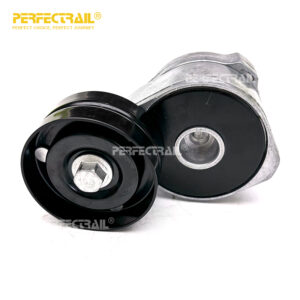
A tensioner pulley is part of the accessory belt tensioning system (often the serpentine belt system). Its job is to keep belt tension stable as the engine speed changes and accessory loads vary. In many designs, the pulley is mounted to an automatic belt tensioner (spring-loaded or hydraulic), and the pulley itself rotates on a sealed bearing.
For Land Rover vehicles, a healthy tensioner pulley helps protect the belt, reduces noise, and supports reliable operation of key systems like charging (alternator) and cooling (water pump and fan-related airflow).
2) Google Hot Topics: Belt Noise, Chirping & Vibration
These are the search topics that most commonly trigger immediate replacement demand and workshop quotes:
- Squealing belt noise (especially on cold start)
- Chirping at idle (often rhythmic, increases with RPM)
- Serpentine belt vibration (visible flutter or oscillation)
- Grinding or rumbling noise near the front of engine (bearing wear)
- Belt wandering / misalignment (pulley alignment or tensioner arm play)
From an SEO perspective, these phrases work well as H3 headings and FAQ questions because they map to strong purchase intent.
3) Tensioner Pulley vs Idler Pulley (Common Confusion)
Many buyers search “tensioner pulley vs idler pulley” because both are smooth rollers on the belt path:
- Tensioner pulley: typically mounted to a tensioner arm and changes position to maintain belt tension.
- Idler pulley: a fixed pulley that guides the belt route but does not apply tension.
For wholesalers, this distinction matters because a customer may ask for “the pulley” without specifying whether they need the complete tensioner assembly or the pulley-only replacement.
4) Top Symptoms of a Bad Tensioner Pulley
4.1 Squeal or chirp that changes with RPM
Noise that increases with engine speed often points to a bearing issue or belt slip from weak tensioning. The “chirp” is commonly heard at idle and becomes a higher-pitched sound as RPM rises.
4.2 Grinding / rumbling noise (bearing wear)
A worn pulley bearing may sound like a low rumble or grinding. Left unaddressed, it can seize and damage the belt.
4.3 Belt vibration or flutter
If the tensioner spring is weak or the tensioner arm is unstable, belt vibration can become visible. This is a high-intent symptom because it often appears shortly before belt failure.
4.4 Belt wear patterns (glazing, cracking, uneven edges)
Incorrect tension or misalignment can cause rapid belt wear. Workshops commonly replace the belt and the tensioner pulley (or complete tensioner) together to prevent repeat comebacks.
Practical workshop tip (high conversion):
If the belt is already removed for service, it’s the best time to spin-check each pulley by hand. Any roughness, play, or noise is a strong replacement cue.
5) Inspection Checklist (Workshop-Friendly)
- Visual check: cracks in pulley surface, damaged belt contact area, missing dust seal.
- Spin test (engine off): listen/feel for roughness or grinding.
- Radial/axial play: any wobble indicates bearing wear.
- Belt tracking: confirm belt runs centered and does not walk off edges.
- Tensioner arm stability: check for excessive movement or weak return force.
- Related pulleys: alternator, idler, water pump, A/C—noise can transfer and be misdiagnosed.
6) B2B Sourcing Checklist (Fitment, QC, Packaging)
6.1 RFQ data to collect (reduces returns)
- OE number(s) + any supersessions
- Vehicle fitment: model/platform code + year range + engine variant
- Part scope: pulley-only vs complete tensioner assembly
- Belt system notes: number of ribs / belt length (if requested by workshops)
- Photo verification: mounting points and pulley profile (fastest cross-check)
6.2 Quality controls that matter in distribution
- Bearing durability: smooth rotation, stable lubrication, proper sealing
- Runout control: reduces belt wander and noise complaints
- Heat resistance: important near engine front accessories
- Traceability: batch code + OE reference on label/carton
6.3 Export packaging recommendations
- Impact protection: prevent bearing shock damage
- Moisture barrier: important for sea freight environments
- Clear labeling: OE number, application, pulley-only vs tensioner assembly
Request a Tensioner Pulley RFQ (B2B)
Send OE number(s), engine/platform details, and whether you need pulley-only or a complete tensioner assembly. We will confirm fitment and quote MOQ & lead time.
FAQ (High-Intent Queries)
Can a bad tensioner pulley cause belt squeal?
Yes. Bearing wear, misalignment, or weak tension can cause belt slip and squeal—especially at cold start or under accessory load.
Is it better to replace the pulley only or the whole tensioner?
If the tensioner arm is stable and the spring action is strong, some repairs use pulley-only replacement. If the spring is weak or the arm is unstable, a complete tensioner assembly is usually the more reliable fix.
What does a failing pulley bearing sound like?
It often sounds like a chirp, rumble, or grinding noise that changes with engine RPM. The noise may be more noticeable at idle.
How do I reduce returns when buying tensioner pulleys wholesale?
Confirm OE numbers, engine/platform fitment, and whether the customer needs pulley-only or a complete assembly. Request a photo to verify mounting and pulley profile.