Land Rover Fan Blade Guide: Symptoms & Sourcing (B2B)
Cooling fans rarely get attention—until a Land Rover starts running hot in traffic, A/C performance drops at idle, or a driver hears a sudden roar, rattle, or vibration from the engine bay. In many cases, the root cause is not the radiator itself, but the cooling fan blade (or the complete fan assembly) failing to move enough air through the radiator and condenser.
This guide is written for B2B buyers—importers, distributors, workshop chains, and fleet maintenance partners—who need a practical understanding of car fan blades, how they fail, how to inspect them, and how to source the right Land Rover fan solutions at wholesale scale.
Quick Navigation
- What a Car Fan Blade Actually Does
- Fan Blade Types: Mechanical vs Electric
- High-Intent Symptoms Buyers Should Know
- Workshop Inspection Checklist
- B2B Sourcing Checklist (OE-Fit, QC, Packaging)
- Featured Fan Blade SKUs (Internal Links)
- Recommended Internal Links (Cooling System Cluster)
- FAQ
What a Car Fan Blade Actually Does
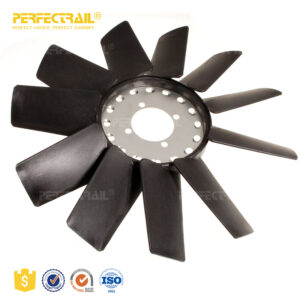
A car fan blade is the rotating airflow element that pulls or pushes air through the radiator (and often the A/C condenser). When vehicle speed is low—idling, stop-and-go traffic, off-road crawling—natural airflow is limited, so the fan becomes critical to maintaining stable coolant temperature and consistent A/C performance.
From a service perspective, “fan blade problems” often present as broader cooling complaints. From a buyer perspective, the takeaway is simple: when airflow drops, heat rises fast—and that creates urgent replacement demand in the aftermarket channel.
Fan Blade Types: Mechanical vs Electric (and Why It Matters)
Most Land Rover cooling fan solutions fall into two categories. This distinction is important for wholesalers because it determines whether the buyer typically replaces a fan blade only or a complete fan assembly.
1) Mechanical fan blade (belt-driven / fan clutch type)
Older platforms and some classic applications use a belt-driven mechanical fan. Many of these setups use a fan clutch so fan speed can vary with temperature demand. In this case, workshop demand can be for:
- Fan blade replacement (cracked, warped, missing blade tips, imbalance)
- Fan clutch replacement (roaring engagement, overheating at idle, inconsistent cooling)
For B2B buyers, mechanical fan blades are commonly requested by model/era (e.g., Range Rover Classic, Discovery I / II), so OE reference and platform code are the fastest way to avoid returns.
2) Electric radiator fan (fan blade integrated into an assembly)
Most modern Land Rover applications rely on an electric radiator fan assembly, where the fan blade is integrated with the motor and shroud. Buyers often choose complete assemblies to reduce comeback risk, simplify installation, and standardize warranty performance.
High-Intent Symptoms Buyers Should Know (Top Google Topics)
These symptoms consistently drive urgent customer searches and workshop quotes—making them high-value SEO subtopics and high-conversion product page entry points:
1) Engine overheating at idle (but improves while driving)
If airflow is insufficient at low speed, temperature rises quickly; once driving speed increases, natural airflow can partially mask the issue. This often triggers searches like “overheating at idle” and “radiator fan not working.”
2) A/C weak at idle
If the fan cannot move enough air across the condenser at low speed, cabin cooling can feel weak or inconsistent—especially in hot climates and urban traffic.
3) Vibration, wobble, or rattling near the fan area
Common triggers include warped/bent blades, imbalance, cracked plastic, or bearing issues. This matters because vibration can damage shrouds, mounts, and nearby components over time.
4) Unusual fan noises: roar, grinding, scraping
Noise often accompanies failure: a blade may contact the shroud (scraping), the clutch may be stuck engaged (roaring), or bearings may be failing (grinding). These complaints typically lead to proactive replacement in workshop channels.
5) Visible blade damage
Cracks, missing sections, or deformation are immediate replacement indicators. For fleet and workshop chains, visible blade damage should be treated as “no debate” due to safety and collateral damage risk.
Workshop Inspection Checklist (Fast, Repeatable)
For distributors serving workshop networks, a simple inspection checklist reduces mis-orders and improves first-time fix rate:
- Visual condition: cracks, chips, missing blade tips, melted or warped plastic.
- Balance & wobble: check blade runout; confirm uniform tip clearance to shroud.
- Shroud clearance: look for contact marks or plastic dust around the shroud.
- Mechanical systems: confirm clutch engagement behavior if applicable (noise pattern + cooling performance at idle).
- Cooling system context: confirm radiator, thermostat, coolant level, and cap condition to avoid “false blame” on the fan.
B2B Sourcing Checklist: What Importers & Distributors Should Specify
When buying Land Rover fan blades or fan assemblies in volume, the objective is to reduce returns, warranty claims, and workshop comebacks. Use this checklist in your RFQ:
1) Fitment definition (non-negotiable)
- OE number(s): cross-reference primary and superseded OE numbers.
- Platform code: e.g., L318 (Discovery II), LJ (Discovery I), Classic platforms, etc.
- Year range & engine: confirm engine variant where applicable.
- Fan type: mechanical blade vs electric fan assembly.
2) Build standards & quality controls
- Material: reinforced plastic/composite with heat resistance; consistent molding quality.
- Balance: vibration control to protect bearings, shroud, and mounts.
- Dimensional accuracy: blade pitch and clearance alignment for stable airflow performance.
- Pre-shipment inspection: appearance and balance checks for mass production lots.
3) Packaging that survives global distribution
- Inner protection: prevent blade deformation in transit.
- Outer carton strength: suitable for palletization and mixed SKU containers.
- Labeling: barcode, OE number, platform code, and batch traceability.
4) Commercial terms that matter to B2B
- MOQ flexibility: mixed-model orders help distributors test demand across platforms.
- Lead time: clarify stock vs production timelines.
- Warranty policy: define coverage period and claim handling process.
- OEM/ODM support: branding, packaging, and labeling customization for your market positioning.
Featured Land Rover Fan Blade SKUs (Internal Links)
If you supply mechanical cooling fan blades in the Land Rover aftermarket, these SKU links can be used as fitment examples and conversion entry points.
Group them by platform to reduce confusion and improve buyer confidence:
Discovery II (L318) Fan Blades
- PGG500340 Fan Blade for Land Rover Discovery II (L318)
- ERR3439 Fan Blade for Land Rover Discovery II (L318)
- ERR4960 Fan Blade for Land Rover Discovery II (L318)
Discovery I (LJ) Fan Blades
Range Rover Classic Fan Blade
Distributor note: Most return disputes happen when buyers mix up platform codes or engine variants. For bulk RFQs, request the customer’s OE number(s),
platform code, year range, and fan type (mechanical blade vs electric assembly) before quoting.
Recommended Internal Links (Cooling System Cluster)
To strengthen your on-site SEO cluster and guide buyers through adjacent cooling parts, link Fan Blade content to these related pages:
- Land Rover parts hub: Land Rover Parts Catalog
- Radiator (high pairing demand): Land Rover Car Radiator Wholesale Supplier
- Expansion tank: Land Rover Car Expansion Tank Wholesale
- Thermostat: Land Rover Thermostat OEM & Wholesale Supplier
- Water pump example: LR008863 Water Pump (Example SKU)
Need Wholesale Pricing for Fan Blades?
Send your OE number list + platform codes + target quantities. PERFECTRAIL supports B2B wholesale programs including mixed-model MOQ, export packaging, and labeling options.
FAQ: Car Fan Blade & Cooling Fan Service
Is a fan blade the same as a radiator fan assembly?
Not always. A fan blade is the rotating airflow part. Many modern Land Rover applications use a complete electric fan assembly (blade + motor + shroud). Mechanical systems may replace the blade and/or the fan clutch separately.
What are the most common signs of a bad fan blade?
The most common high-intent symptoms are overheating at idle, weak A/C at idle, vibration/wobble, unusual noises, and visible blade damage such as cracks or missing tips.
Can a cracked fan blade cause bigger damage?
Yes. A cracked or imbalanced fan can damage shrouds, mounts, and bearings, and in severe cases can break apart under load. Visible cracks should be treated as an immediate replacement condition.
How do I reduce returns when buying fan blades wholesale?
Validate by OE number + platform code + year/engine, specify QC checks, use protective packaging to prevent deformation, and standardize labeling for traceability (OE, platform, batch).